Solar Path Lights Ip Rating: Ip65 vs Ip67 Guide
Let’s talk solar path lights IP rating—because nothing says “I love wasting money” like buying cute lights that drown after the first real storm. The problem is most people treat an IP label like it’s a force field. It’s not.
If your yard gets sprinklers, sideways rain, snow melt, or that one low spot that turns into a bird bath every January, the outdoor solar lights IP rating matters more than “lumens” marketing fluff. You’re buying a tiny electronics box that lives outside. Nature doesn’t care about your Amazon stars.
Table of Contents
- Why IP ratings matter for solar lights
- IP code explained without the brochure talk
- IP44 vs IP65 solar path lights: the ugly truth
- IP65 vs IP67 solar lights: who needs what
- What waterproof solar path lights rating to buy
- Build quality signals that make IP claims real
- Fast buying checklist (no regrets edition)
- Frequently Asked Questions
- Final insider takeaway
Why IP ratings matter for solar lights
Snippet answer: A solar path lights IP rating tells you how well the light resists dust and water intrusion, and it directly predicts survival outdoors. For open yards, IP65 is a practical minimum; IP67 is smarter for puddles, sprinklers, or harsh weather. IP44 is best reserved for sheltered areas.
Here’s the truth: solar path lights fail in three main ways—water gets in, batteries degrade, or cheap plastics crack and leak. IP ratings only speak to one of those… but it’s the one that causes the “worked for two weeks” reviews.
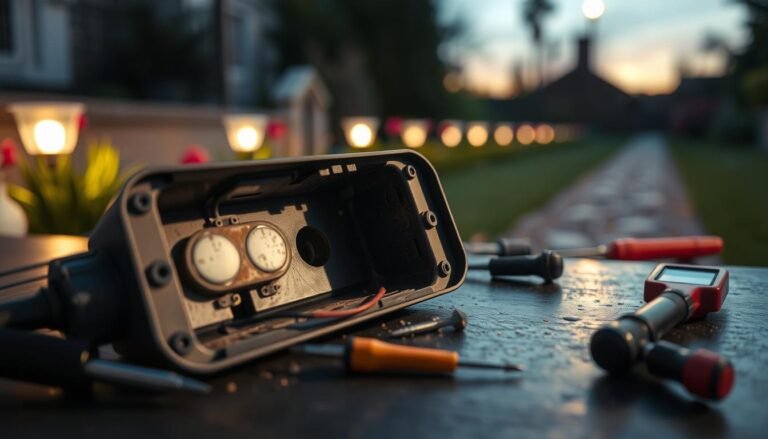
And because these things are low-voltage and packed tight, even a little moisture can mean corrosion, fogged lenses, or a short that turns your “automatic dusk-to-dawn” into “random blink-to-dead.”
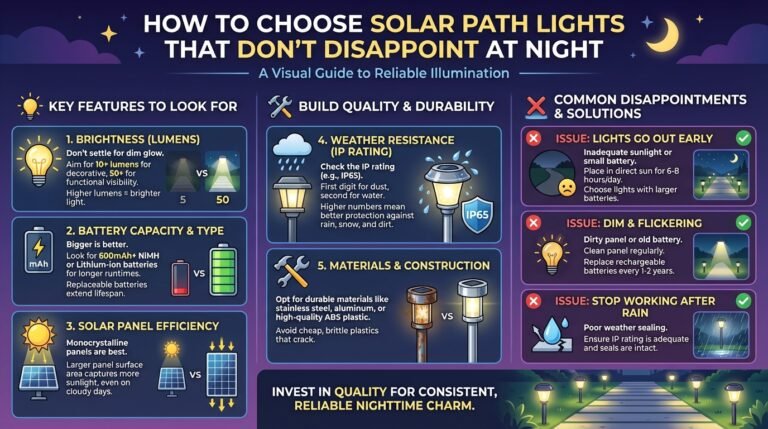
If you want to avoid disappointment at night, you should also understand brightness trade-offs and runtime claims—this pairs well with my deeper breakdown on how to choose solar path lights that don’t disappoint at night.
For the actual standard behind IP codes, the starting point is the IP Code overview (Ingress Protection) and its roots in IEC 60529.
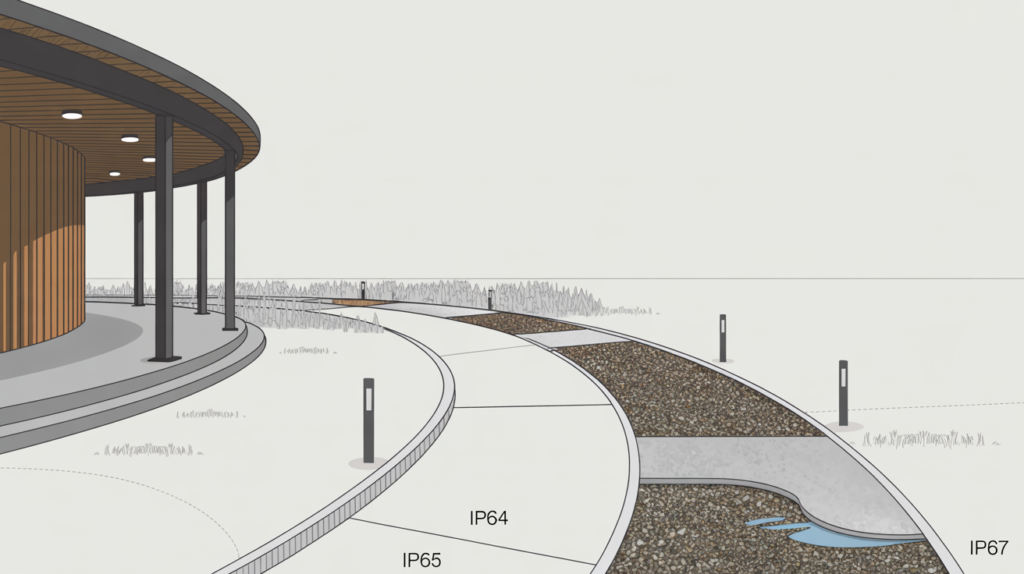
IP code explained without the brochure talk
IP ratings have two digits: solids first, water second.
- First digit (dust/solids): 0–6. A “6” means dust-tight. This matters more than people think because fine dust + humidity = grime paste in seals and switches.
- Second digit (water): 0–9. This is the number everyone cares about because water is the fast killer.
Quick translation for the water digit (the part that drives most outdoor failures):
- 4: splashing water (think light rain, occasional splash)
- 5: water jets (sprinklers, heavier rain hitting from angles)
- 6: powerful water jets (nastier spray, storm force, hose blast)
- 7: temporary immersion (brief dunking, pooled water incidents)
- 8: continuous immersion (manufacturer-defined conditions)
Notice what’s missing? “Survives three winters, UV exposure, lawn fertilizer overspray, and a toddler kicking it.” IP doesn’t cover that. If you want durability features and smarter designs, skim these solar path light technology upgrades—a lot of “weatherproof” is engineering, not labels.
Also, you’ll sometimes see IPX5 or IPX7. That “X” means the solids rating wasn’t listed. Not always bad, but it is a sign the product spec sheet is… selective.
IP44 vs IP65 solar path lights: the ugly truth
Let’s say it plainly: IP44 vs IP65 solar path lights is the difference between “might survive” and “built for outdoors.”
IP44 is splash resistance. If your lights are under an eave, in a covered entryway, or in a climate that basically does polite drizzle, IP44 can be fine.
But in an open yard?
IP44 lights get murdered by wind-driven rain and sprinklers. Water hits seams, lens edges, switch cutouts, and the solar panel perimeter. Those are leak highways on cheaper builds.
IP65 (commonly seen as “waterproof solar path lights rating” in marketing) is where products start behaving like outdoor gear instead of indoor décor that wandered outside.
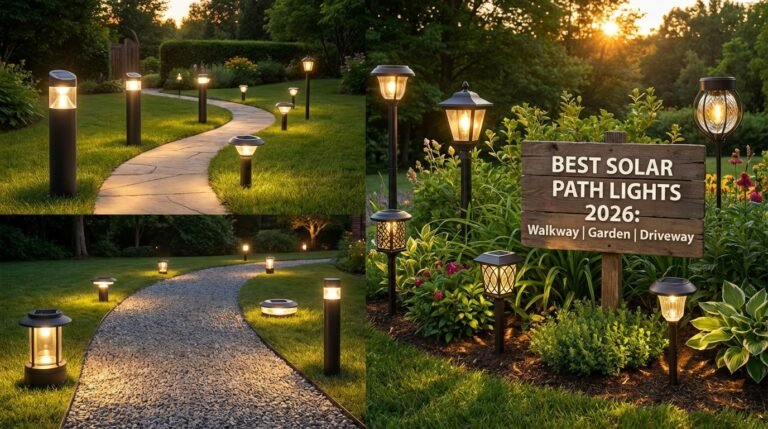
If you’re shopping a “best of” list and wondering why some sets actually last, there’s a reason sturdier picks tend to cluster around better ratings and better housings. For a reality check on what’s worth buying, see best solar path lights for walkways, gardens, and driveways.
IP65 vs IP67 solar lights: who needs what
This is where people overthink it. IP65 vs IP67 solar lights is mostly about one question: Will the light ever sit in pooled water or take prolonged soaking?
IP65: great for open walkways, rain, sprinklers, and general “outside life.” It’s the most reasonable minimum for the average homeowner.
IP67: adds temporary immersion tolerance. That’s your friend if:
- Your mulch bed gets soggy and stays that way.
- You have low spots that puddle after storms.
- Snow melt piles up along the path edge.
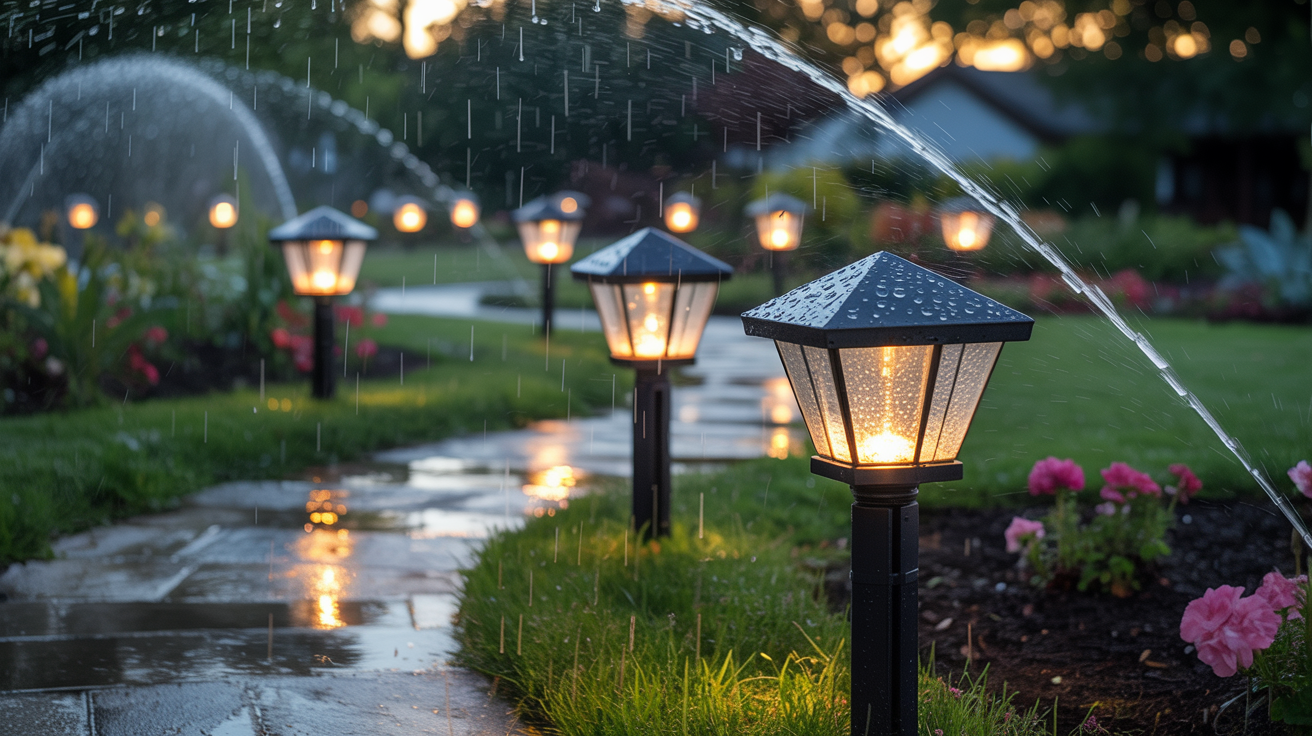
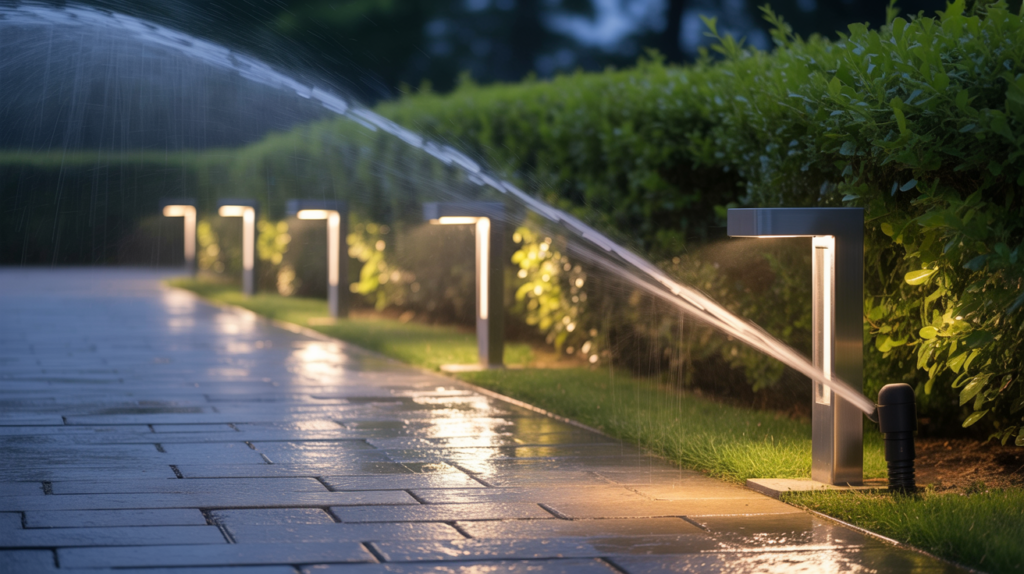
- Your sprinklers hit the lights directly (and you’re not changing the sprinkler pattern because… you won’t).
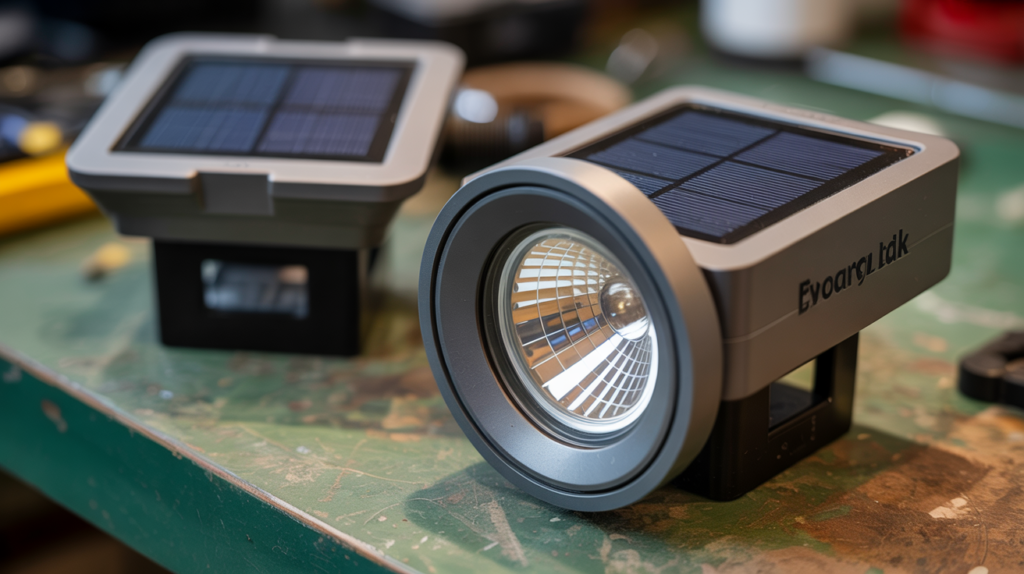
One more industry reality: some brands slap “IP67” on a product, but leave the weak point unprotected—usually the switch, the battery door, or the solar panel seam. That’s why you can’t shop by rating alone.
Want the broader standard context? The U.S. also talks about wet-location safety in different ways (not IP), and for electrical safety guidance you can sanity-check outdoor exposure basics through the OSHA electrical safety resources. Different scope, but useful perspective: water + electricity is never “meh.”
What waterproof solar path lights rating to buy
If you want a dead-simple rule that works in the real world:
- Covered porch / sheltered steps: IP44 can work (still not my first pick).
- Open walkway / garden path: IP65 minimum. Period.
- Driveways, sprinkler zones, puddle-prone spots: IP66 or IP67.
- Near pools / irrigation overspray / flood-prone areas: push to IP67, plus better materials.
And if a listing screams “IP68” with zero details? Be skeptical. IP68 can be legit, but the immersion conditions are manufacturer-defined, which means it can also be marketing improv night.
This is also where you stop letting brightness marketing bully you. A light can be “bright” and still be junk if the seal design is trash. Brightness guidance is covered more deeply in the practical engineering sense here: choosing lights that don’t disappoint at night.
Build quality signals that make IP claims real
Here’s where the veteran-insider part kicks in: a rating is a lab test. Your yard is a reality show.
These build signals usually separate survivors from “one-season wonders”:
- Lens + housing fit: tight tolerances and a visible gasket beat “snap-fit plastic” every time.
- Sealed switch design: external rubber boot or internal sealed button. A bare slider switch cutout is basically an invitation.
- Battery compartment strategy: fewer seams is better. If there’s a door, it needs a real gasket and firm closure.
- Drain/vent strategy: good products manage condensation with membranes/vents rather than pretending humidity doesn’t exist.
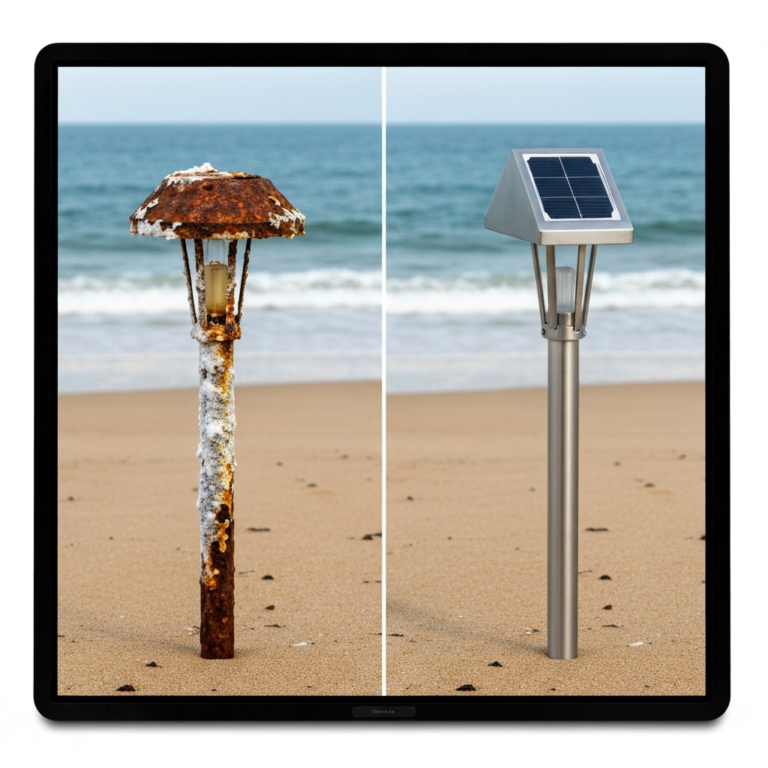
- Materials: stainless fasteners and UV-stable plastics reduce cracking and corrosion—two silent IP killers.
Hot take: flimsy “diamond cut” clear plastic tops look fancy and crack faster. When they crack, water doesn’t even need to “ingress.” It just walks in.
If you’re trying to pick lights for walkways, gardens, and driveways with fewer regrets, cross-check your shortlist with the durability and layout logic in this buying guide.
Also, for the gold-standard definition of ingress protection terms (including the nuances around water tests), Wikipedia’s references around IEC 60529 are more honest than most product listings.
Fast buying checklist (no regrets edition)
You want a quick filter you can apply in 60 seconds? Here you go.
- Start at IP65 for any truly outdoor placement. If it’s IP44, it better be sheltered.
- Upgrade to IP67 for puddles, heavy sprinkler exposure, snow melt, or low-lying beds.
- Inspect the weak points: switch, battery door, lens seam, solar panel seam.
- Don’t confuse “waterproof” with “durable”: UV and freeze-thaw still matter.
- Buy for your layout: driveways and wide paths often need tougher housings and smarter spacing (the guide here helps: walkways, gardens, and driveways picks).
Bottom line: if your yard is harsh and you go cheap, you’re not saving money—you’re signing up for a subscription plan called “replace every spring.”
Frequently Asked Questions
Is IP65 enough for solar path lights in heavy rain?
Usually yes—if the light is built correctly. IP65 handles rain and water jets, but it doesn’t guarantee the battery compartment, switch, and seams are well sealed. If your lights sit in puddles, get splashed by sprinklers, or see storms that blow water sideways, look for IP66/IP67 and better construction cues.
What’s the real difference between IP65 vs IP67 solar lights?
IP65 is about resisting water jets; IP67 adds temporary immersion tolerance (often up to 1 meter for around 30 minutes, depending on the manufacturer’s spec). IP67 is more forgiving when water pools at the base—common in clogged mulch beds and low spots.
Why do some IP-rated solar lights still die after one winter?
Because IP ratings don’t cover everything that kills outdoor gear. Freeze-thaw cycles, UV degradation, corrosion, cheap battery chemistry, cracked plastic, and bad sealing around switches can ruin a “waterproof” light. IP is one checkbox—not a durability guarantee.
Does IP rating measure dust too, or only water?
It measures both. The first digit is solids (dust), the second digit is water. A rating like IP65 means ‘6’ (dust-tight) and ‘5’ (water jets). If you see IPX5, the ‘X’ means the solids test wasn’t specified.
Are ‘IP44’ solar path lights a waste of money?
Not always, but they’re a gamble outdoors. IP44 is splash-resistant, not storm-proof. For covered porches or gentle climates, fine. For open walkways, sprinklers, wind-driven rain, or snow, IP44 often turns into a wet electronics experiment.
Final insider takeaway
If you remember one thing: solar path lights IP rating is your “will it drown?” predictor, not your “will it last?” guarantee.
Fast forward to smarter buying: start at IP65 for open outdoor installs, go IP67 when puddles and sprinklers are part of your life, and always sanity-check the seams and switch design before you believe the label.
Now go buy lights that can survive outside… because the weather has zero interest in your return window.
As an Amazon Associate, I earn from qualifying purchases.