Best Solar Path Lights for Walkways 7 Buying Rules
Best solar path lights for walkways are not the brightest ones on the shelf—they’re the ones that still look good and stay lit when the weather gets rude. The problem is most “great deal” solar lights are basically disposable mood lights: fine for two weeks, then they fade like your New Year’s resolutions.
If you’re shopping for solar lights for front path curb appeal, you need two things: reliable runtime and controlled glare. Everything else is marketing confetti. Fast forward to the part most buyers skip: brightness targets, spacing, battery reality, and which designs are worth your money.
Table of Contents
- Quick Answer: What to Buy (and why)
- How Bright Should Walkway Lights Be?
- Solar Path Light Spacing for Walkway
- What Actually Matters: Solar Path Lights Buying Guide
- Solar Walkway Lights Reviews (by type)
- Installation Mistakes That Kill Performance
- Maintenance: Batteries, Panels, and Longevity
- Frequently Asked Questions
- Final Take: The insider rule
Quick Answer: What to Buy (and why)
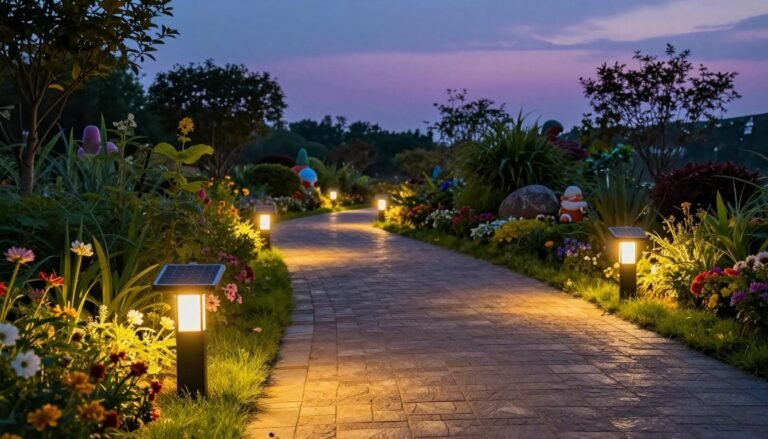
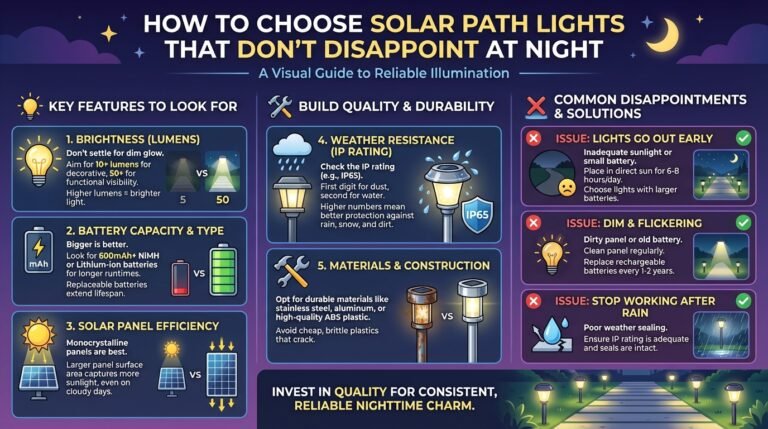
Here’s the truth: the best solar path lights for walkways are “medium-bright, warm-white, replaceable-battery” lights spaced correctly and installed where the panels actually see sun. Pick lights with real weather sealing, a decent panel, and a sane beam pattern. Avoid “mega-lumen” hype unless you love glare.
If you want simple, low-drama walkway lighting, shop in these buckets:
- Warm white (2700K–3000K), 10–30 lumens-ish: subtle guidance lighting, best for curb appeal.
- Brighter 30–80 lumens: if you have steps, uneven pavers, or you actually want to see detail.
- Diffused lens + taller stake: less glare, cleaner light distribution.
- Replaceable batteries: this is non-negotiable if you don’t want to rebuy every season.
Before you buy anything, skim this quick solar path lights buyers guide and reviews hub for the specs that separate “good” from “garden landfill.”
How Bright Should Walkway Lights Be?
Most people overbuy brightness and underbuy consistency. Then they wonder why their walkway looks like a parking lot (for 45 minutes) and then goes dark.
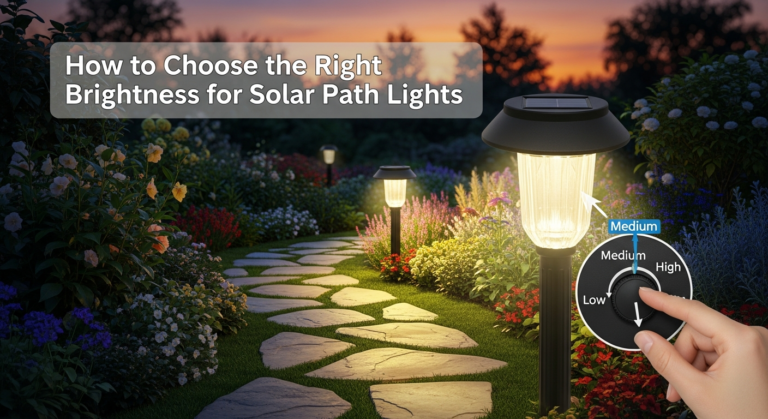
For typical home paths, 10–30 lumens per light is plenty if the beam is diffused and the spacing is sane. That gives you “guide lighting”—you can see the edges and direction without blinding yourself or your guests.
When do you go brighter?
- Steps, elevation changes, or uneven stone: you want contrast so toes don’t lose arguments with concrete.
- Dark yards with minimal ambient light: brighter fixtures can help, but only if the panels charge well.
- Security-ish use: this is where motion-boost modes can work—steady low, then brighter on movement.
If you want a sanity check on how brightness is measured, the U.S. Department of Energy has straightforward guidance on lumens and lighting basics here: energy.gov lighting choices. (Yes, solar lights still end up playing by the same lumen rules—marketing doesn’t change physics.)
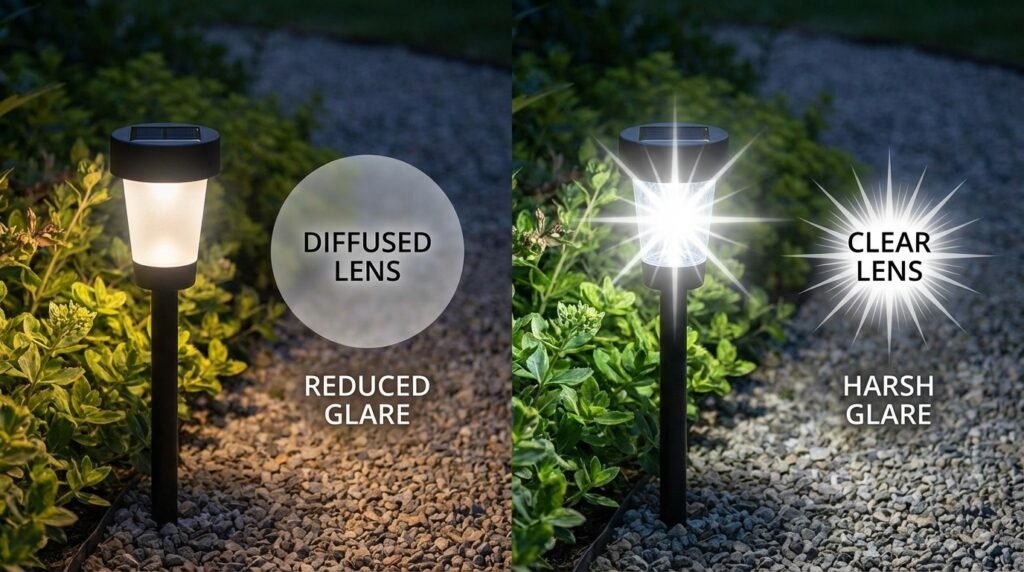
Also: don’t confuse “bright” with “good.” Beam control matters more than raw output. A harsh, narrow beam causes hotspot glare and makes the rest of the walkway look darker by comparison. A diffused optic looks “brighter” to your brain because the light is usable.
Solar Path Light Spacing for Walkway
Spacing is where most walkways go from “magazine nice” to “random runway.” And no, “one every few feet” isn’t a plan.
Start with 6–10 feet (about 2–3 meters) apart for standard path lights. Then adjust:
- 4–6 feet: steps, corners, and high-risk trip zones.
- 8–12 feet: long straight paths where you want subtle guidance and minimal clutter.
- Staggering beats symmetry on curves: it looks more natural and reduces “light dots” vibes.
Here’s the cheat: place lights to outline edges, not to “light the whole slab.” People navigate by boundaries. Your walkway doesn’t need to be a stadium.
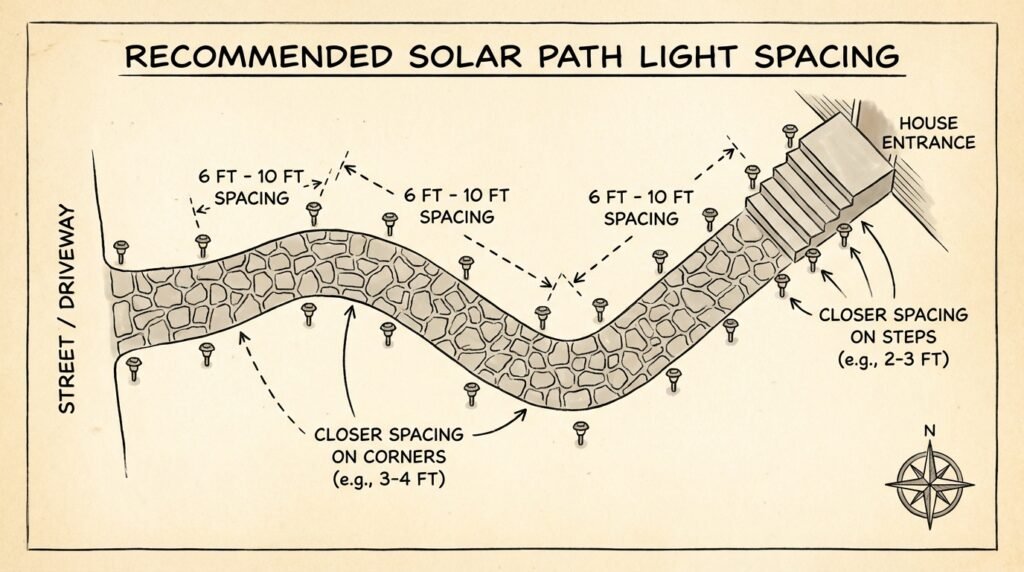
Want the deeper planning version (layout, sun exposure, and avoiding rookie placement mistakes)? Use this as your blueprint: solar lighting basics and installation planning.
What Actually Matters: Solar Path Lights Buying Guide
Let’s separate real engineering from “features” that exist solely to fill a bullet list.
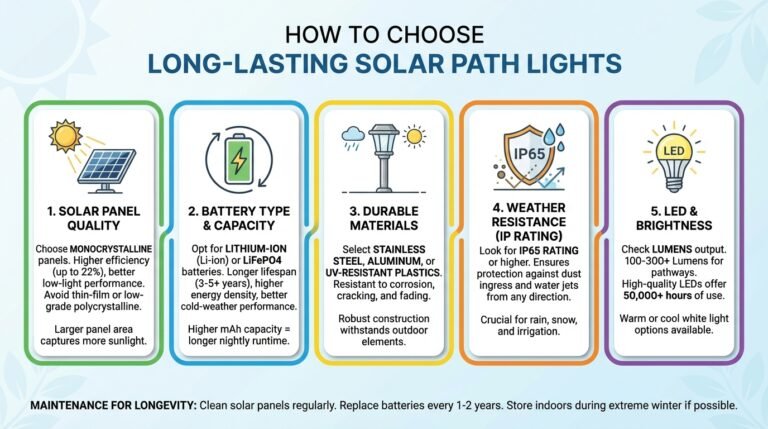
1) Solar panel quality (aka the part that does the work)
A bigger, more efficient panel beats a brighter LED every time. If the panel can’t harvest enough energy, your “bright” light is just a daytime ornament. Solar cells and PV basics are covered well by NREL (National Renewable Energy Laboratory) here: nrel.gov photovoltaics research.
2) Battery type and replaceability
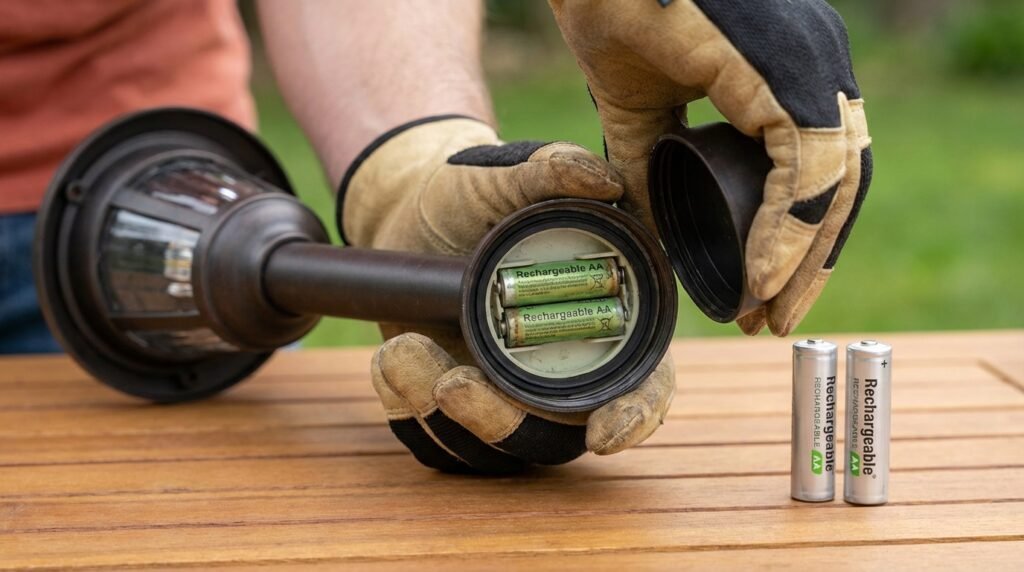
Most path lights use NiMH or Li-ion variants depending on design. Either can work. The real question is: can you replace it without performing surgery? If there’s no battery door and it’s sealed shut, you’re buying a temporary relationship.
Battery chemistry aside, rechargeable basics (and why capacity drops over time) are well explained here: Wikipedia: rechargeable batteries.
3) Optics and glare control
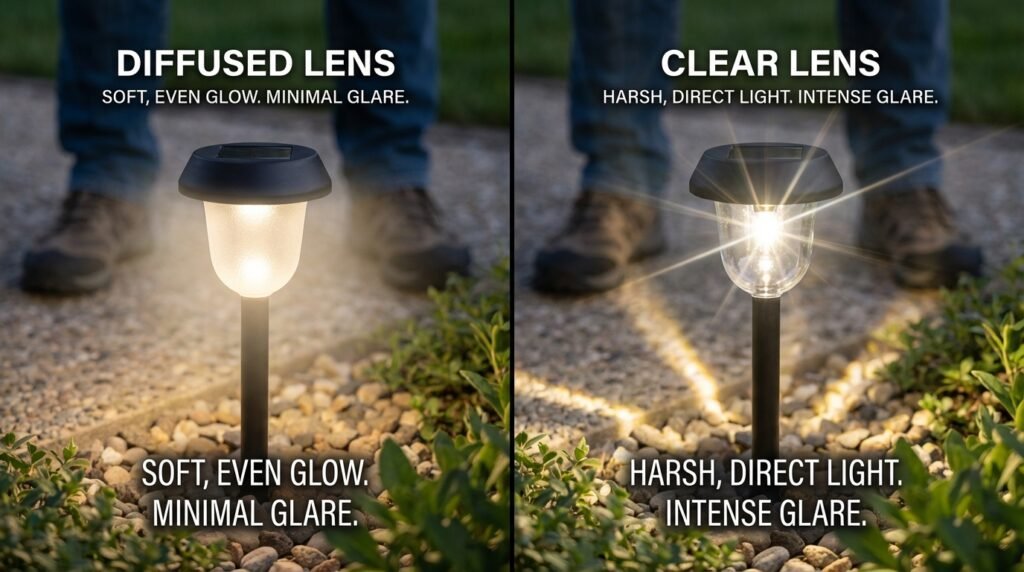
Clear lenses can look “bright,” but they can also look cheap and blinding. Diffused lenses (frosted, prismatic, or shielded) spread light where it helps instead of punching your eyeballs.
If you can see the LED point source from standing height, expect glare. The best walkway setups hide the source and show the glow.
4) Weather resistance that isn’t a lie
Outdoor means UV, rain, sprinklers, dust, and freeze-thaw cycles. Stainless steel can be legit—or it can be a thin cosmetic sleeve over plastic. The tells: solid gaskets, tight seams, and stakes that don’t snap when the soil is compacted.
5) Color temperature for curb appeal
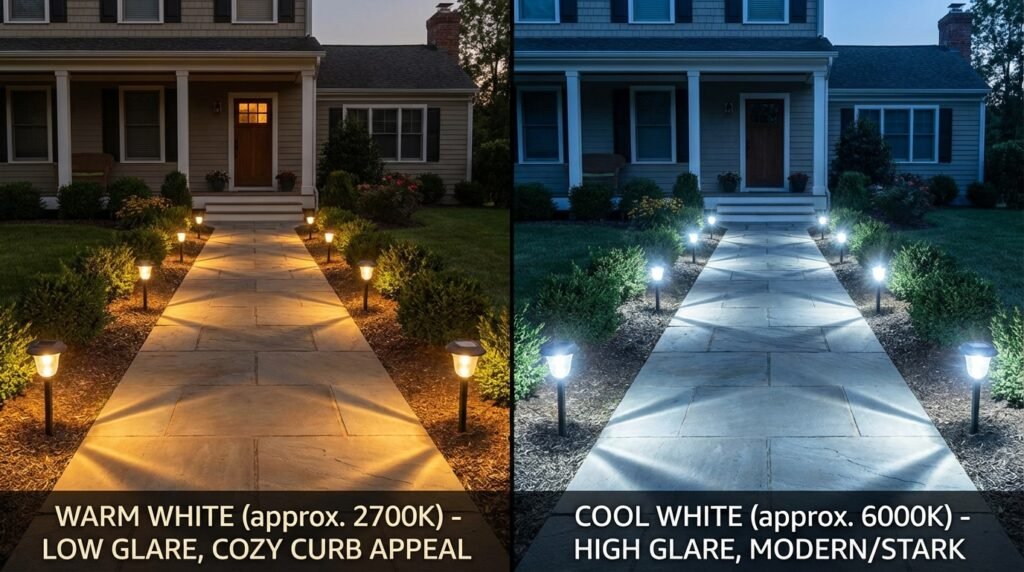
For most front paths, warm white looks better and feels more premium. If you’re curious why different “whites” exist, color temperature basics are summarized here: Wikipedia: color temperature.
Bottom line: warm white = welcoming. Cool white = “I bought these at the last minute.”
Solar Walkway Lights Reviews (by type)
These aren’t brand-specific “trust me bro” reviews. This is the field-tested way to choose a design that matches your walkway and doesn’t disappoint at night.
Type A: Classic stake path lights (best for most people)
Best use: outlining walkways, gardens, and drive edges with soft guidance light.
What can suck: flimsy stakes and tiny panels that can’t keep up after a cloudy day. If you see micro-panels and “super bright” claims, assume the runtime will be the first thing to collapse.
Buy this type if: you want dependable curb appeal with minimal fuss.
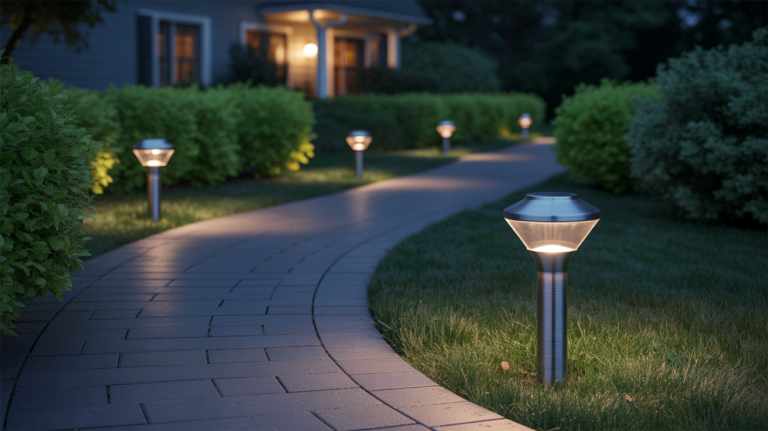
Type B: Bollard-style solar lights (the “looks expensive” upgrade)
Best use: front walks where aesthetics matter and you want fewer fixtures with cleaner light.
Why they win: bigger housings often allow larger panels and better diffusion. Less glare, more “designed.”
Downside: you pay more per light, and cheap versions still exist—just taller.
Type C: Motion-boost walkway lights (for “I want brighter sometimes”)
Best use: longer paths where you want low glow all night plus a brightness pop when someone walks by.
What can suck: overly sensitive PIR sensors that trigger on trees, pets, or passing cars—so the battery gets drained before midnight. If the sensor is bad, this type is a battery vampire with a diploma in annoyance.
Type D: In-ground “puck” lights (pretty, but pick carefully)
Best use: path borders where you want flush aesthetics, not stakes.
What can suck: water intrusion and dirty lenses. In-ground lights live in splash and mud. If the sealing is mediocre, they die young.
If you want a tighter framework for comparing types (and avoiding “looks great in the listing photo” traps), circle back to the main solar path lights buying guide and use it like a checklist.
Installation Mistakes That Kill Performance
Solar lights fail for boring reasons. Not mysterious reasons. Boring reasons.
- Putting panels in shade: “It gets some light” is not a charging strategy.
- Aiming lights at eyeball height: this is how you create glare and hate your own walkway.
- Over-spacing dim lights: now you have a dotted line of disappointment.
- Ignoring sprinklers: constant water spray finds weaknesses fast.
- Installing in super compacted soil without pre-drilling: stakes snap, you get mad, the light gets blamed.
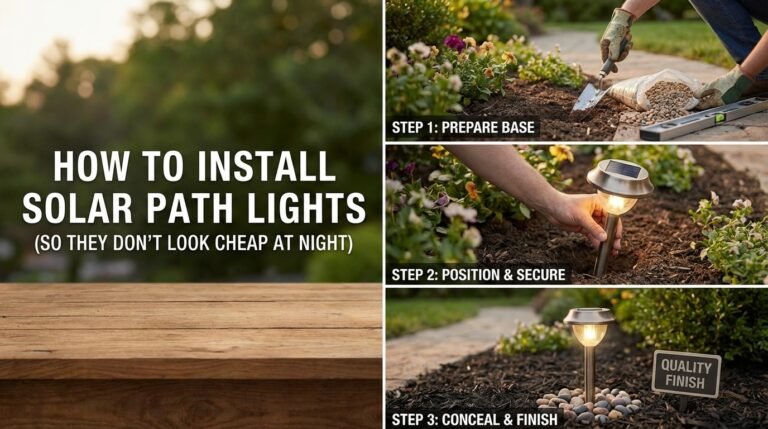
For a front path, install in late afternoon and do a quick “standing view” test before you commit. Walk it. Turn around. Look back at the house. If it feels like headlights, you did it wrong.
Need the full planning approach (sun mapping, layout options, and a practical setup sequence)? Use this: installation planning 101.
Maintenance: Batteries, Panels, and Longevity
Most “dead” solar lights aren’t dead. They’re just undercharged, dirty, or running tired batteries.
Panel cleaning: wipe the panel with a damp cloth every few weeks (more if you have pollen, dust, or sprinkler overspray). A hazy panel is a smaller panel—functionally.
Battery refresh: if lights fade early, don’t panic-buy a new set. Replace batteries first (when the design allows it). It’s the cheapest fix and usually restores runtime immediately.
Want the step-by-step, including what battery types to look for and how to avoid damaging seals? Read this: how to replace and upgrade solar light batteries.
One more insider point: don’t chase max brightness if your yard can’t charge it. A “bright solar path lights for walkway” setup only stays bright if the panel and battery system can feed it. If you have partial shade, choose moderate brightness and better optics. You’ll get more consistent nights and less frustration.
Frequently Asked Questions
How bright should solar path lights be for a walkway?
For most homes, 10–30 lumens per light gives clean guidance lighting without glare. If you have steps, uneven surfaces, or you want more visibility, look for 30–80 lumens with good diffusion. Brightness without beam control is just noise.
What’s the best solar path light spacing for a walkway?
Start at 6–10 feet apart. Tighten to 4–6 feet near steps and turns, and expand to 10–12 feet on straight runs if the lights are brighter or you have strong ambient lighting. Spacing is your secret weapon for “premium” looking results.
Do solar walkway lights work in winter or shady yards?
They work, but not magically. Shorter days and shade reduce charge, which reduces runtime. If your panels don’t get several hours of direct sun, choose moderate brightness, prioritize efficient panels, and consider motion-boost modes to stretch battery life.
Are replaceable batteries worth it in solar path lights?
Yes. Replaceable batteries are the easiest long-term win because batteries are the first component to degrade. A set with standard battery sizes and a battery door can last years with simple swaps instead of becoming seasonal trash.
What color temperature looks best for a front path?
Warm white (about 2700K–3000K) is the safe bet for curb appeal: inviting, flattering, and less harsh. Cool white can look “brighter,” but it often creates glare and makes landscaping look flat. Your front path isn’t a warehouse aisle.
Final Take: The insider rule
Here’s the truth: the best solar path lights for walkways aren’t the ones with the loudest lumen claim—they’re the ones with good panels, decent batteries, and optics that don’t punch you in the face.
Do this and you’ll win: keep brightness realistic, nail your solar path light spacing for walkway, go warm white for the front, and only buy designs you can maintain. If a model hides its battery like a secret, assume it’s planning a short relationship.
Bottom line: light the edges, not your retinas. If you follow that rule, your walkway will look expensive even if your budget wasn’t.
As an Amazon Associate, I earn from qualifying purchases.