
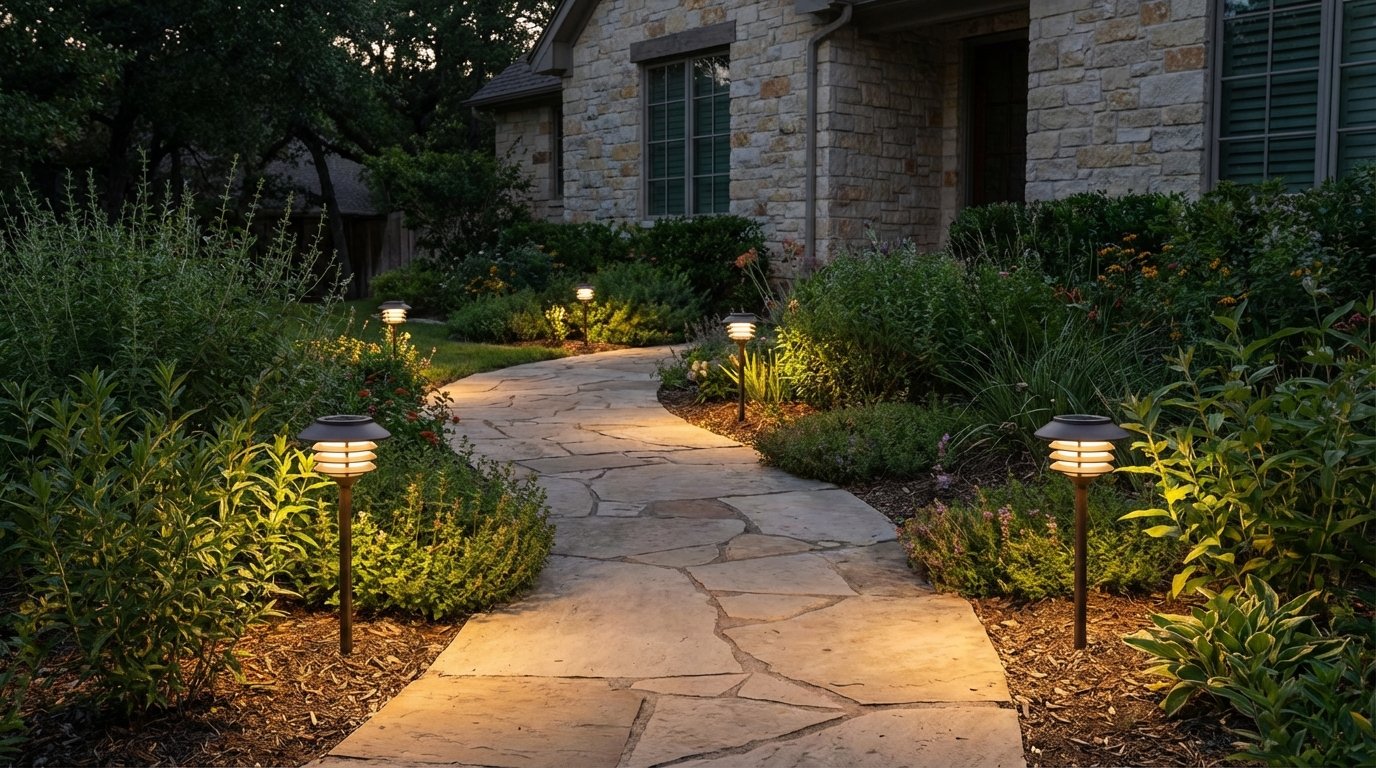
Solar Path Lights Placement Rules That Prevent Glare
Solar path lights placement rules that prevent glare are the difference between a clean, professional-looking walkway and a yard that feels like a low-budget airport runway. The problem is simple: most people buy decent lights and then install them like they’re guessing.
Fast forward to dusk. Instead of subtle guidance, you get blinding hotspots, angry neighbors, and guests squinting like they walked into headlights.
Here’s the truth: glare isn’t a product problem. It’s an installation problem.
Table of Contents
- Why Solar Path Lights Cause Glare
- Proper Height and Angle Rules
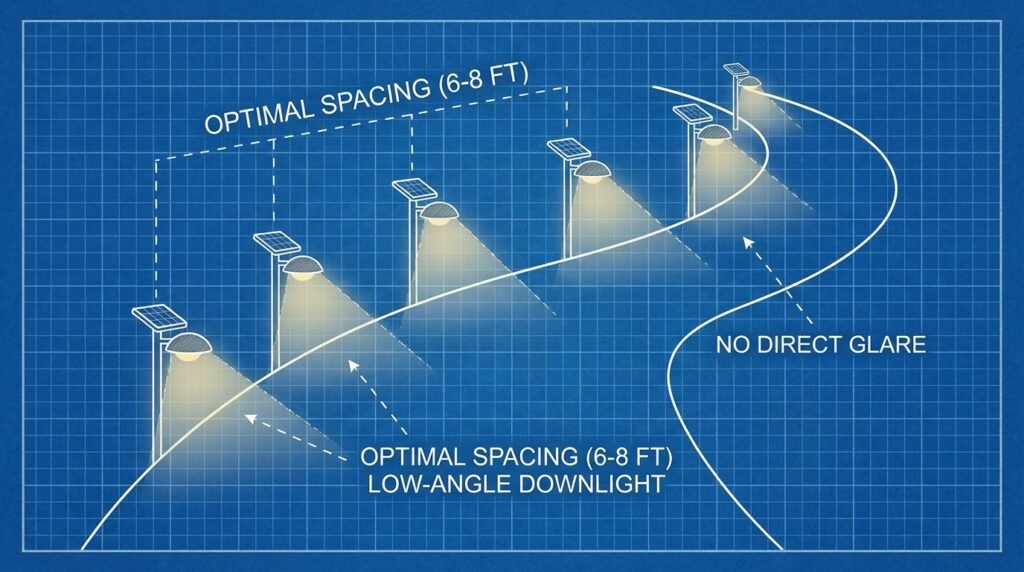
- Spacing Rules That Actually Work
- Beam Control and Shielding
- Matching Placement to Path Geometry
- Choosing Fixtures That Reduce Glare
- Frequently Asked Questions
Why Solar Path Lights Cause Glare
Snippet answer: Solar path light glare happens when fixtures are too bright, too high, aimed incorrectly, or spaced poorly—causing direct light to hit eye level instead of the ground.
Glare happens when light goes where it shouldn’t. Period.
The human eye hates contrast. According to the Wikipedia glare definition, discomfort glare occurs when brightness overwhelms visual adaptation. Translation: your brain gets annoyed.
This is why proper placement ties directly into solar path lighting safety best practices. Visibility beats brightness every time.
Proper Height and Angle Rules
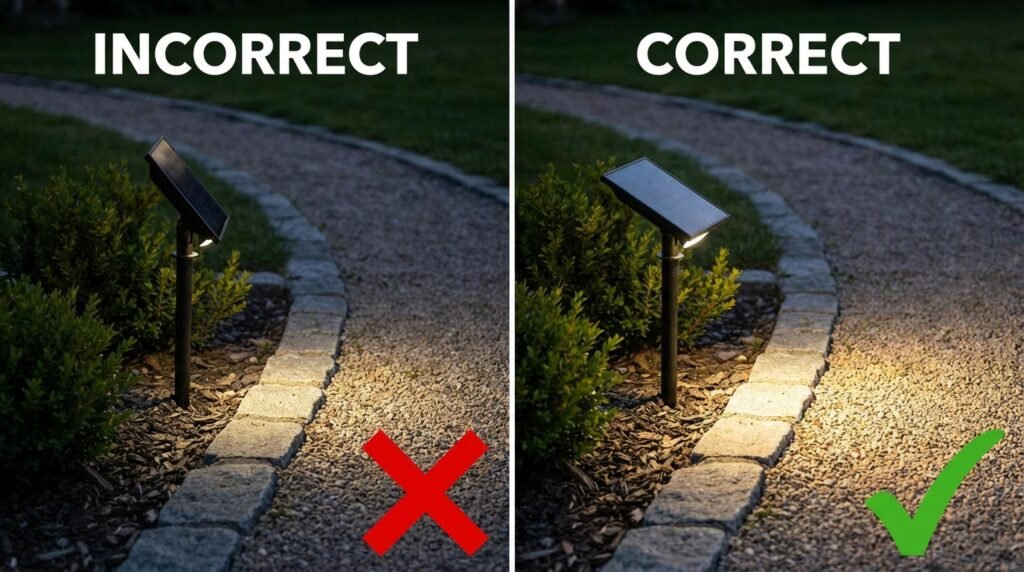
Rule number one: path lights are not spotlights.
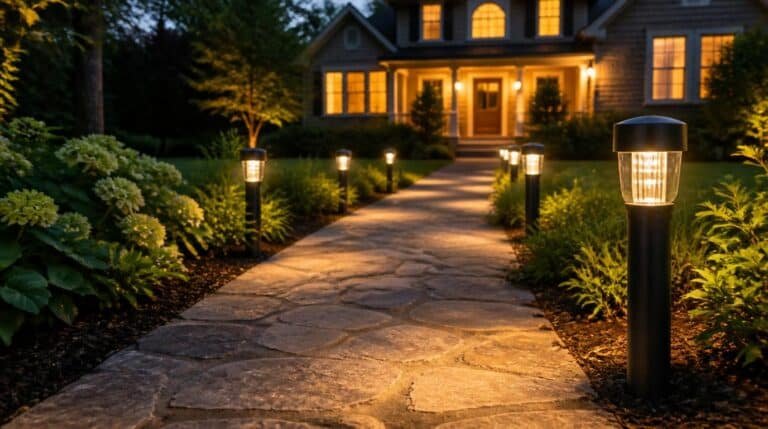
Ideal mounting height sits between 12 and 18 inches. Taller than that and you’re firing light straight into retinas. Shorter than that and you create harsh contrast pools.
Angle matters more than height. Lights should aim slightly downward and inward—never horizontal. This aligns with guidance from the U.S. Department of Energy on glare control.
If the bulb is visible from standing eye level, you already screwed up.
Spacing Rules That Actually Work
Most manufacturers lie by omission here.
General rule:
- Low output (5–15 lumens): 4–6 feet apart
- Mid output (20–40 lumens): 6–8 feet apart
- High output (50+ lumens): 8–12 feet apart
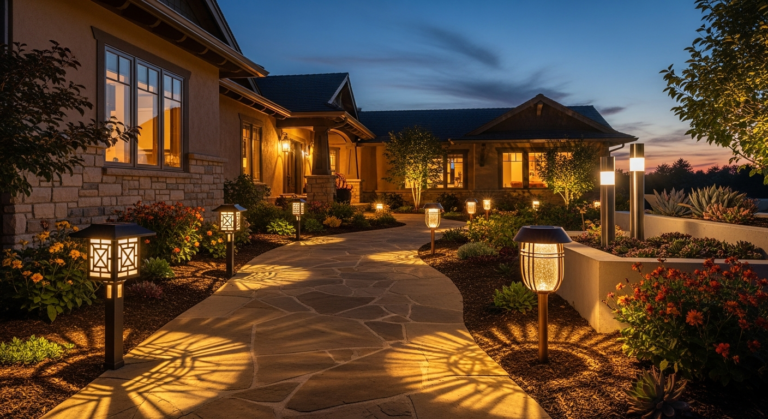
Overlap creates glare. Gaps create darkness. You’re aiming for continuity, not saturation.
This spacing logic pairs well with the planning principles outlined in solar lighting installation planning.
Beam Control and Shielding
Clear lenses are glare factories. Full stop.
Frosted or diffused lenses scatter light downward and soften transitions. Shielded caps prevent lateral spill.
According to research cited by the International Dark-Sky Association, fully shielded fixtures reduce glare and skyglow without sacrificing safety.
This is why experienced buyers obsess over beam shape, not lumen bragging rights. If you’re shopping, start with curated picks from this buyer’s guide.
Matching Placement to Path Geometry
Straight paths are easy. Curves expose amateurs.
On curves, tighten spacing slightly and favor the inside edge. This keeps the walking line illuminated without blasting light outward.
Stairs? Lights go to the side, never head-on. Glare on elevation changes increases fall risk—something covered extensively in path lighting safety standards.
Choosing Fixtures That Reduce Glare
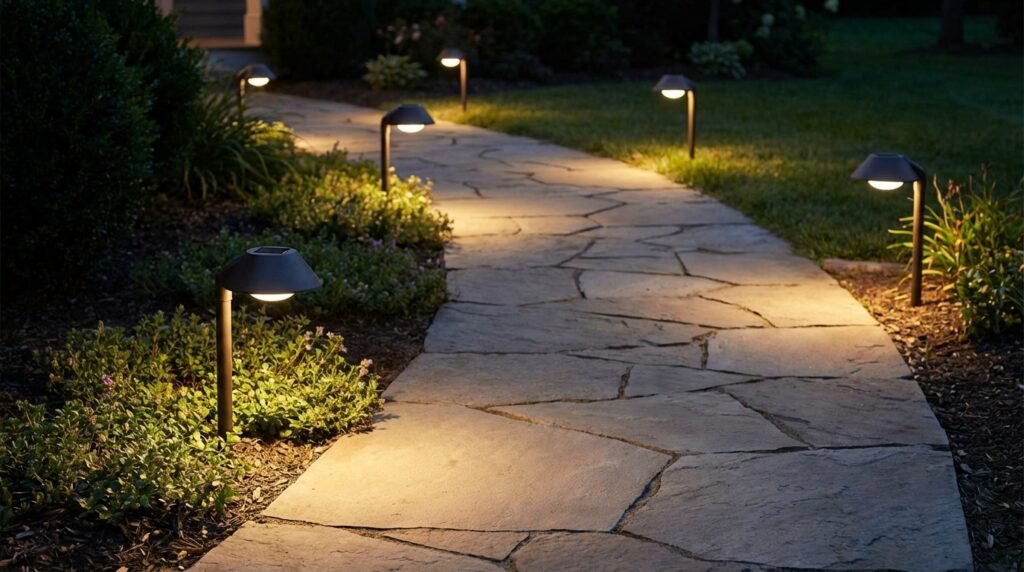
Bottom line: bad fixtures make good placement impossible.
Look for:
- Recessed LED emitters
- Warm color temperatures (2700K–3000K)
- Opaque or frosted lenses
- Downward-only light distribution
Avoid anything advertising “ultra-bright” for path use. That’s marketing, not engineering.
If budget matters, bookmark this no-BS deals guide and stop guessing.
Frequently Asked Questions
Can I angle solar path lights after installation?
Yes, and you should. Minor tilt adjustments often eliminate glare without moving the stake.
Do solar path lights bother neighbors?
Only when installed poorly. Shielded, downward-facing lights rarely cross property lines.
Is more light safer?
No. Uniform light is safer. Glare reduces contrast detection and depth perception.
Insider takeaway: Glare-free lighting isn’t about buying better lights—it’s about respecting physics and human vision. Install like an adult, not a teenager with a drill.
If your path looks calm, guides footsteps, and disappears into the landscape, you did it right. If it looks like a sci-fi landing strip… well, you know what to fix.
As an Amazon Associate, I earn from qualifying purchases.
One Comment
Comments are closed.