7 Solar Path Light Placement Safety Rules for Walkways
Solar path light placement safety rules for walkways aren’t about “making it pretty.” They’re about not blinding people, not tripping your guests, and not turning a simple path into a lawsuit-shaped hobby. The problem is most solar lights are designed by the “looks good in the box” department, not by anyone who has watched real humans walk at night.
Fast forward to dusk: wet pavers, kids running, someone carrying groceries, and your lights are either doing nothing… or doing the most (straight into eyeballs). That’s the failure mode. Let’s fix it with placement rules that actually work.
Table of Contents
- The non-negotiables for a safe walkway
- Solar path light spacing distance that doesn’t look weird
- Best height for solar path lights without glare
- Walkway solar lights glare prevention that actually works
- Solar path lights trip hazard prevention checklist
- A simple path lighting safety layout you can copy
- Recommended gear that improves safety (without wasting money)
- Frequently Asked Questions
- Bottom line
The non-negotiables for a safe walkway
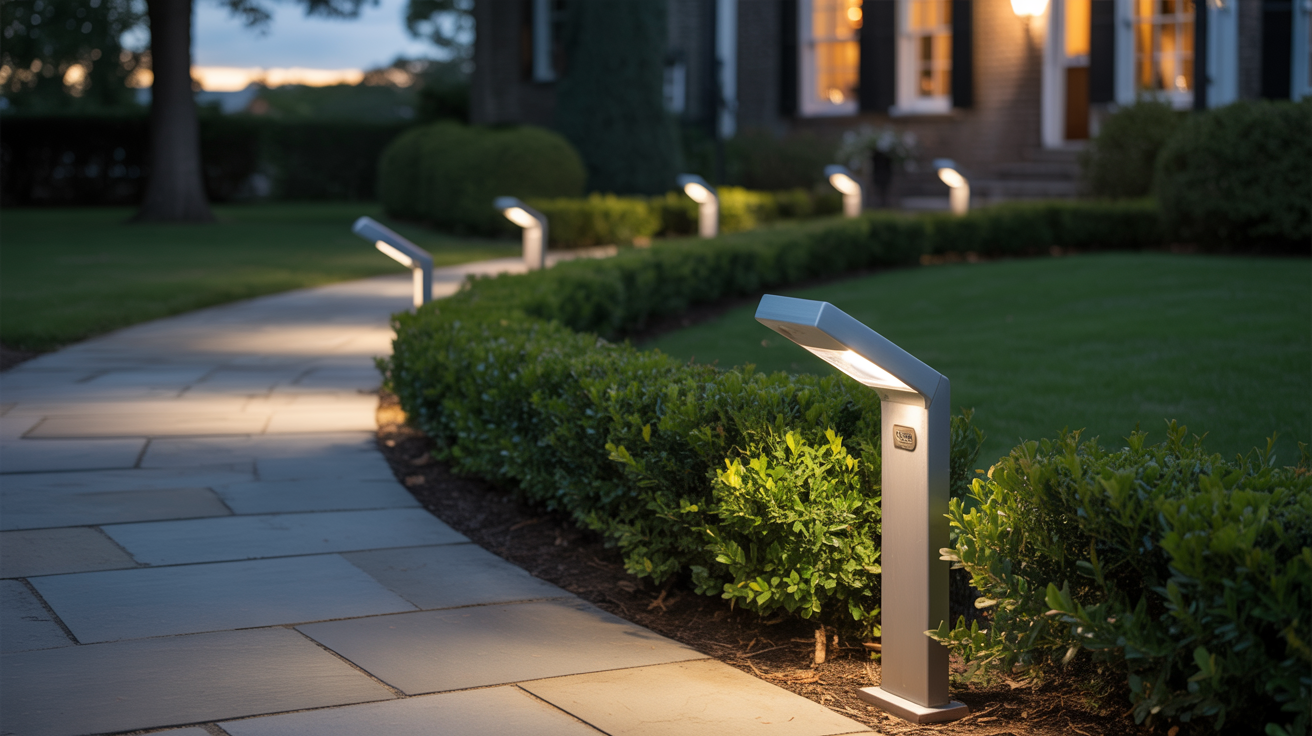
Place lights to illuminate the walking surface, not faces. If your “path lights” are visible as bright points from normal standing height, you’ve built a glare machine, not a safety system.
Keep the walking lane physically clear. Stakes and fixtures that creep into the travel line are the outdoor version of leaving LEGO bricks on stairs.
Plan for rain, frost, and soil movement. Solar lights that are “fine” on install day can turn into tilted spears after the first weather cycle.
Featured-snippet answer (quick rules): Use solar path light placement safety rules for walkways by setting lights outside the walking line, keeping consistent low height with shielded heads, spacing them evenly to avoid dark gaps, and aiming light down to stop glare. Prioritize stable mounting so fixtures can’t tilt or protrude into the path.
Also: if you want the “why” behind safety-focused outdoor lighting, this is exactly the kind of thinking we cover in our solar path lights safety and security guide—because security lighting that causes glare is security theater.
Solar path light spacing distance that doesn’t look weird
Let’s talk about the mistake I see constantly: people eyeball spacing, then wonder why the path looks like a landing strip… with potholes of darkness between lights.
Here’s the truth: spacing is not “one number.” It depends on beam spread, brightness, surface reflectivity, and whether you’re lighting a straight path or a curvy one.
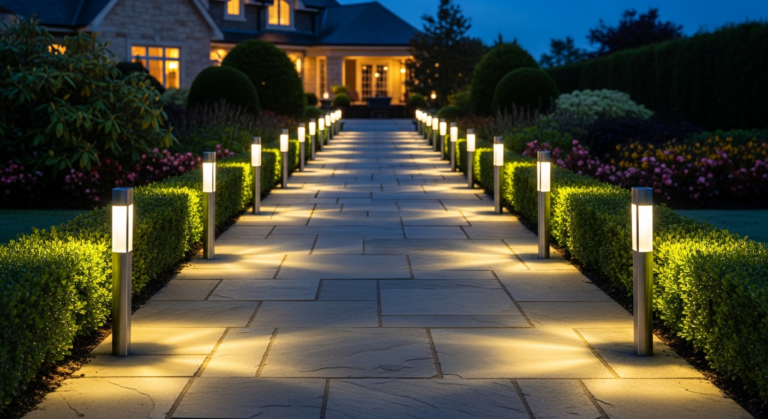
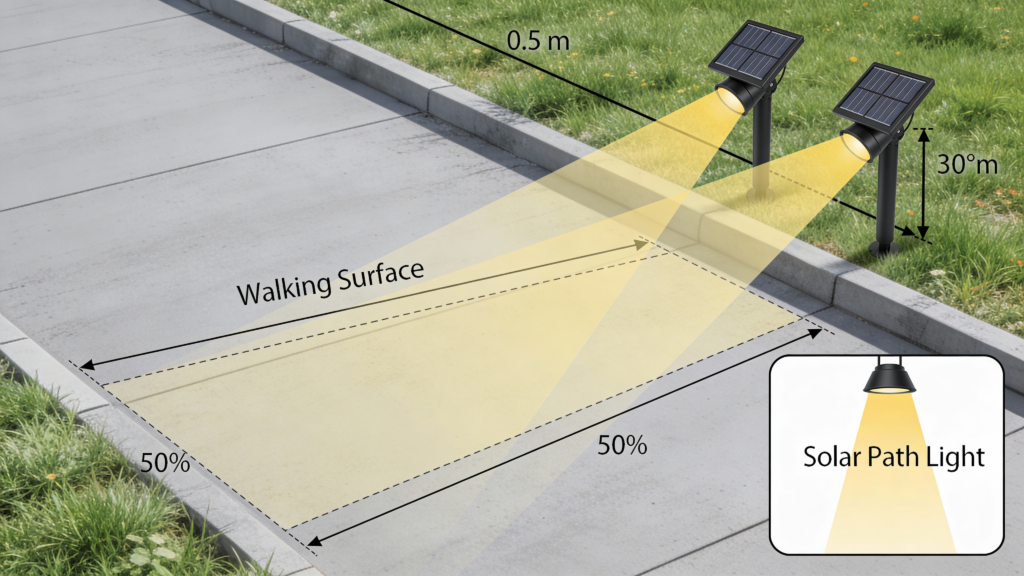
- Typical safe range: 6–10 ft (1.8–3 m) between lights for most residential walkways.
- Go tighter (4–6 ft): dark stone/pavers, steps, uneven surfaces, elderly guests, or dim fixtures.
- Go wider (10–12 ft): only if the fixture is genuinely bright with a wide, downward beam and you’re not creating glare.
Spacing is about eliminating “surprise zones.” A dark gap on a walkway isn’t cozy ambiance—it’s where ankles go to die.
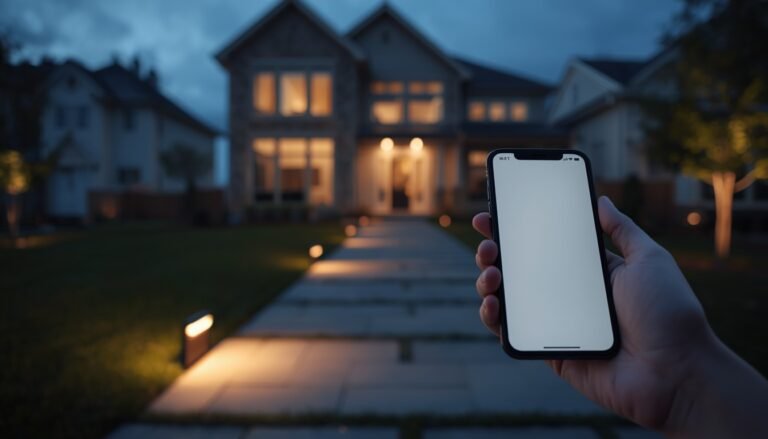
Pro tip that saves time: do a quick “phone test.” Put your phone camera at chest height, point down the walkway, and check for alternating bright/dark bands. If you see zebra stripes, your spacing is off.
And don’t ignore code-level thinking. Some municipal lighting standards talk in footcandles to avoid both under-lighting and over-lighting; for example, a local ordinance for walkway illumination may specify minimum and maximum levels to prevent excessive brightness.
Best height for solar path lights without glare
The “best height for solar path lights” is basically a tradeoff between coverage and comfort.
Too low and you get tiny pools of light with harsh contrast. Too high and you get direct glare, especially if the LEDs are exposed (a shockingly common design choice).
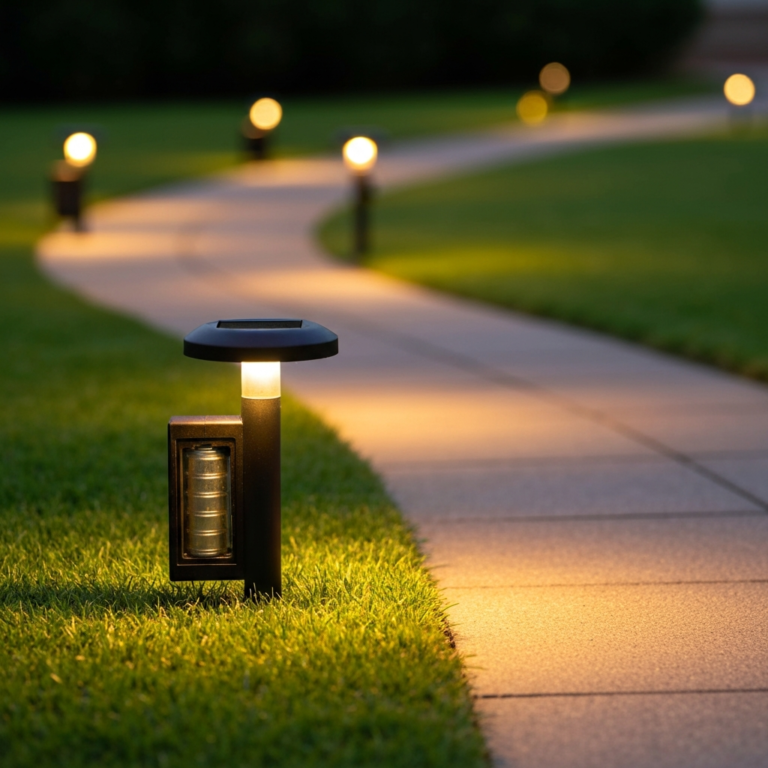
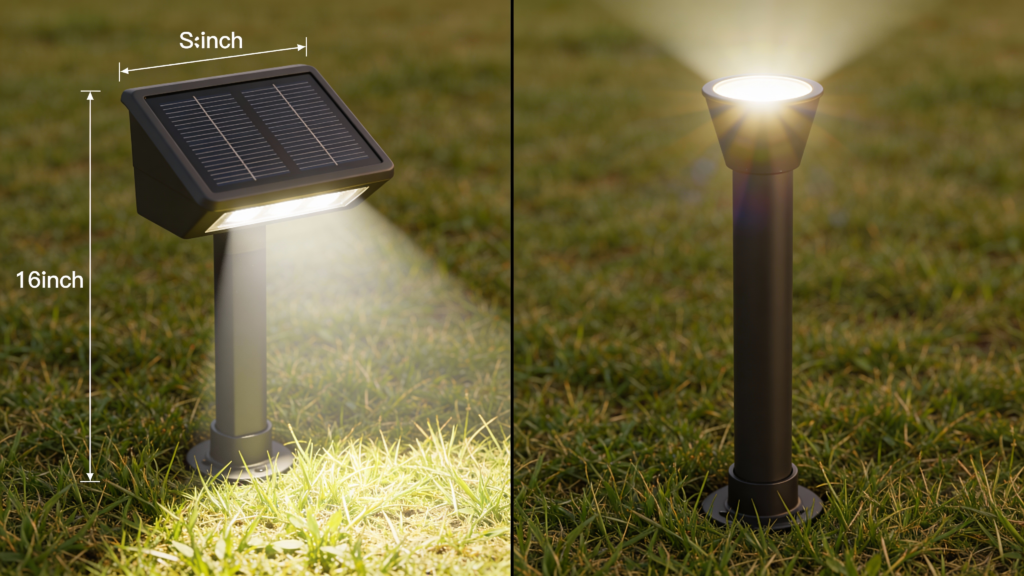
Most walkways do best with 12–18 inch stake lights—but only if the head is shielded so the light goes down and out, not straight into people’s eyes.
Want a rule you can use without owning a light meter?
- Stand where a person would walk.
- If you can see the LED source, lower it, shield it, or move it.
- If the walking surface is still patchy, tighten spacing (don’t crank height).
Glare isn’t just “annoying.” It reduces contrast and makes it harder to see the surface you’re trying to light. That’s literally what glare does.
Walkway solar lights glare prevention that actually works
Glare is the #1 reason “bright” path lights make walkways feel less safe. Your eyes adapt to the bright points, and suddenly the darker areas look darker. Great job, you built the opposite of visibility.
Walkway solar lights glare prevention comes down to three moves:
- Shielding: choose lights with an opaque top/hood and a recessed light source.
- Aim: light should be directed downward onto the path, not sideways.
- Placement: keep fixtures out of direct sightlines (especially near steps, landings, and turns).
If you want a deeper, more tactical breakdown (including common “glare traps” people don’t notice until they hate their setup), use this internal guide: solar path lights placement rules that prevent glare.
Also, don’t confuse “more lumens” with “better.” Over-bright, poorly shielded lights create disability glare and reduce useful contrast.
Solar path lights trip hazard prevention checklist
Most trip hazards aren’t dramatic. They’re subtle, repetitive, and perfectly placed where feet naturally go.
This is your solar path lights trip hazard prevention checklist:
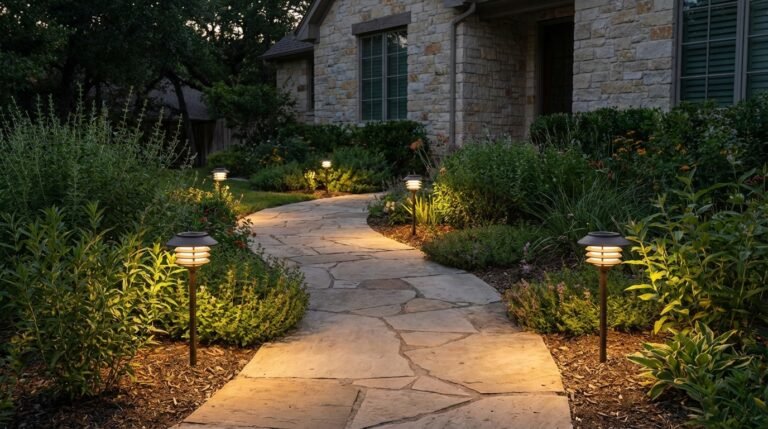
- Setback rule: place lights a few inches off the edge of the walkway (not on the edge, not in the lane).
- Corner rule: on curves and corners, pull lights back farther—people cut corners.
- Stake stability: if soil is soft, use longer stakes or a solid base. If the light leans, it’s a hazard.
- Flush hardware: no exposed brackets, no protruding mounts, no “cute” spikes in circulation areas.
- Step rule: never rely on one light to cover a step. Steps need redundancy.
Why so strict? Because real standards treat circulation paths seriously. Accessibility guidance limits objects that protrude into walking routes specifically to reduce hazards—especially for people with vision impairments. :contentReference[oaicite:3]{index=3}
And yes, workplace safety regulators have entire frameworks around walking-working surfaces because slips and trips are not a “small” problem. Different context, same physics.
A simple path lighting safety layout you can copy
Let’s turn the rules into a clean path lighting safety layout you can repeat on almost any residential walkway.
- Map the travel line. Where do feet actually go? Mark it with tape or chalk.
- Mark “no hardware zones.” Keep fixtures out of the travel line and out of corner-cut zones.
- Place lights in pairs around steps/landings. One light = one failure point.
- Start with 8 ft spacing. Then tighten only where the surface is uneven, dark, or sloped.
- Do the glare walk. Walk the path at night from both directions. If any light is “in your face,” fix it.
One-sentence reality check: If the path looks bright in photos but feels sketchy to walk, you’ve got glare and contrast problems.
Also, don’t cheap out on durability. A light that fills with water, fogs up, or loses output turns your carefully planned layout into random dark spots. If you want a brutally practical buying filter, read how to choose long-lasting solar path lights (no-BS engineer’s guide).
Recommended gear that improves safety (without wasting money)
I’m not going to pretend every solar light is “premium.” Some are junk: weak stakes, exposed LEDs, and optics that spray light like a lawn sprinkler. The fix is to buy for control, not hype.
Three purchase filters that correlate with safer outcomes:
- Shielded head / recessed emitter (reduces glare and keeps light on the ground)
- Stable mounting (longer stake, thicker post, or base options)
- Warm-to-neutral color temperature (less harsh, better comfort; still visible)
Safe pick #1: shielded solar path lights (your glare insurance)
Safe pick #2: heavy-duty replacement stakes / anchors (because leaning lights are a trip hazard)
Safe pick #3: low-profile solar pathway lights (better for tight paths and corner zones)
Bottom line: spend for shielding and stability. If a light’s design lets you see the LED from standing height, it’s not “modern.” It’s just badly engineered. And glare is a known visibility killer.
Frequently Asked Questions
How far apart should solar path lights be on a walkway?
Most walkways land in the 6–10 ft (1.8–3 m) range for solar path light spacing distance. Tighten spacing for dim fixtures, dark surfaces, steps, or uneven terrain. Widen spacing only if the beam is wide, aimed down, and you’re not creating glare stripes.
What is the best height for solar path lights on walkways?
For most residential paths, the best height for solar path lights is around 12–18 inches with a shielded head. Taller fixtures can work, but only if the emitter is recessed and the light is directed down, not outward into eye level.
How do I prevent glare from walkway solar lights?
Choose shielded/recessed designs, avoid exposed LEDs, aim light downward, and place fixtures where the source isn’t in the line of sight when approaching from either direction. Glare reduces contrast and makes surfaces harder to read at night. :contentReference[oaicite:6]{index=6}
What causes solar path lights to become a trip hazard?
Bottom line
Insider takeaway: The safest walkway lighting isn’t the brightest—it’s the most controlled. Nail the spacing, keep height reasonable, aim light down, and keep fixtures out of the walking line. That’s the whole game.
If your setup looks “bright” but still feels sketchy to walk, don’t buy more lights. Fix glare, fix spacing, and fix stability. Your ankles will thank you. Your guests too.
As an Amazon Associate, I earn from qualifying purchases.