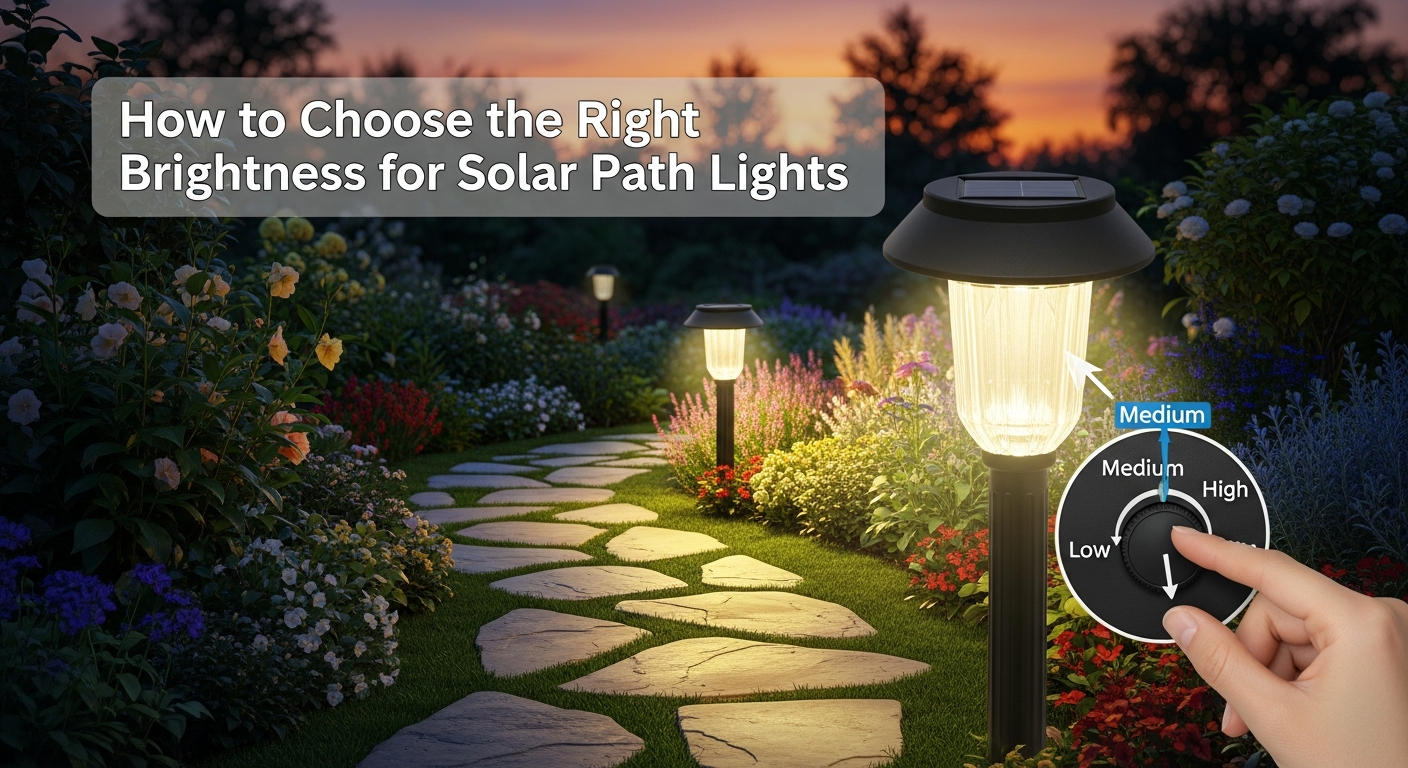
How to Choose the Right Brightness for Solar Path Lights
How to choose the right brightness for solar path lights is where most homeowners screw things up. They either buy dim glow-sticks that barely light a shoelace, or stadium-bright fixtures that blind guests and drain batteries by midnight.
Here’s the truth: brightness is not about buying the highest lumen number on the box. It’s about matching light output to purpose, spacing, optics, and solar hardware quality. Miss one variable, and the whole setup underperforms.
Table of Contents
- Lumens, Not Watts: The Metric That Matters
- Choosing Brightness by Real-World Use Case
- Spacing, Optics, and Why Bright Lights Still Fail
- Solar Panel and Battery Reality Check
- Common Brightness Mistakes (Avoid These)
- Frequently Asked Questions
Lumens, Not Watts: The Metric That Matters
Short answer: Use lumens to choose brightness. Ignore wattage. LED watt ratings are marketing noise.
Watts measure power consumption. Lumens measure visible light output. Since LEDs vary wildly in efficiency, two lights with the same wattage can produce completely different brightness levels.
According to the U.S. Department of Energy, LED efficiency ranges from under 50 lumens per watt to over 150 depending on diode quality and thermal design (energy.gov).
Bottom line: if a product listing doesn’t clearly state lumen output, walk away.
Choosing Brightness by Real-World Use Case
The problem is people shop without defining what the light actually needs to do.
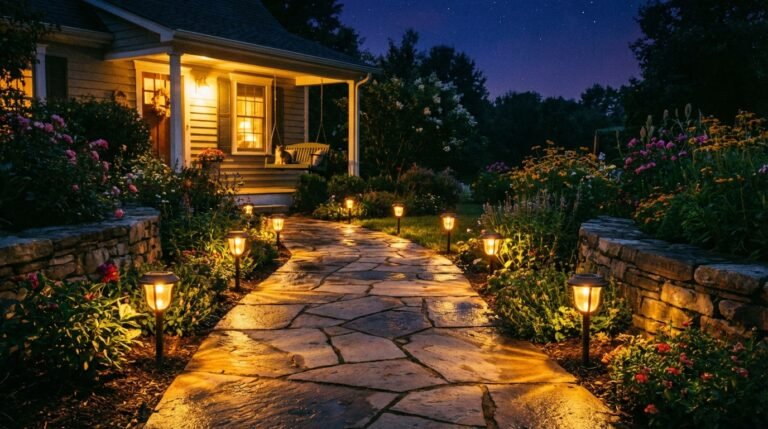
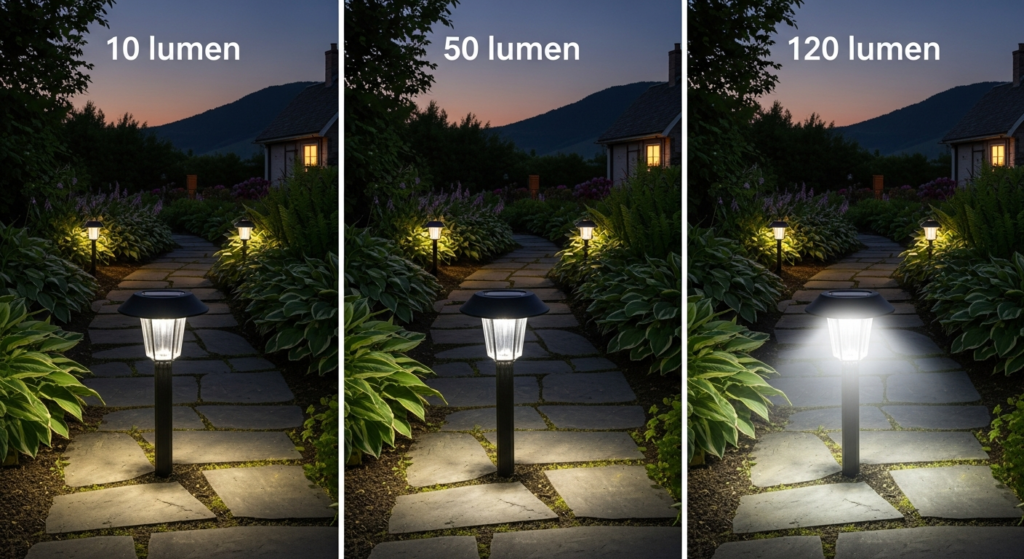
Decorative garden paths: 10–30 lumens. Enough to outline the path, not enough to illuminate it. Anything brighter kills ambiance.
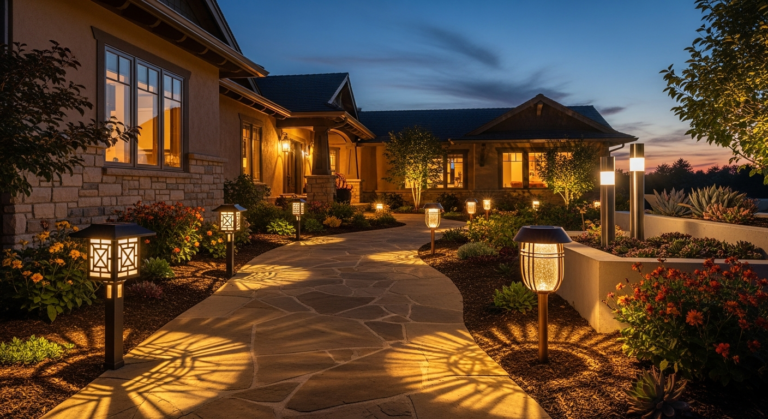
Standard walkways and sidewalks: 50–100 lumens per fixture. This range provides safe footing without glare.
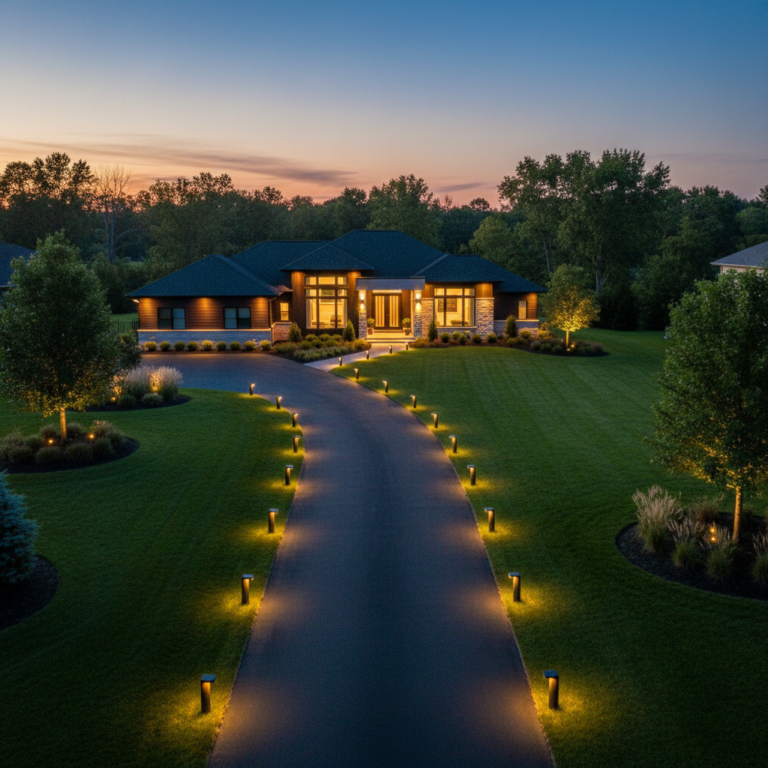
Driveways and wide paths: 100–200 lumens, spaced farther apart. At this point, optics matter more than raw output.
Security-adjacent lighting: If you’re expecting path lights to replace motion floodlights, stop. They won’t. That’s a different product class entirely.
If your lights fade fast, check your installation approach. Poor spacing and shallow mounting are classic rookie mistakes covered in this solar path light installation guide.
Spacing, Optics, and Why Bright Lights Still Fail
This is where most reviews lie to you.
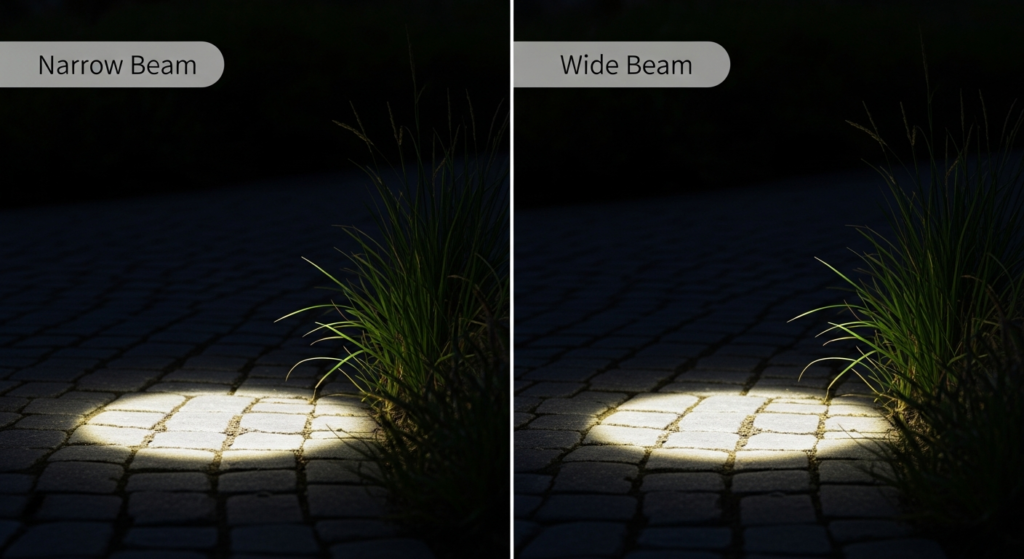
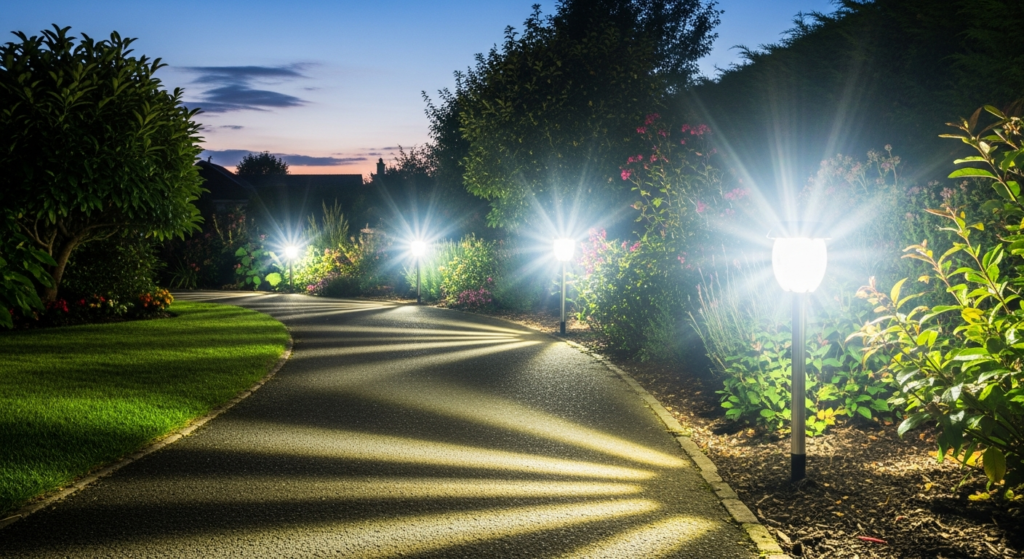
Brightness without beam control is useless. A cheap 150-lumen light spraying photons sideways looks dimmer than a well-focused 60-lumen unit.
Quality path lights use reflectors or lenses to push light downward. Cheap ones rely on bare LEDs. Guess which lasts longer and looks better.
Spacing rule of thumb:
- 50 lumens: 6–8 feet apart
- 100 lumens: 8–10 feet apart
- 150+ lumens: 10–12 feet apart
If you want a deeper breakdown of layout planning, this solar lighting planning guide explains it without fluff.
Solar Panel and Battery Reality Check
Fast forward to the uncomfortable truth: brightness is capped by hardware.
Small solar panels can’t recharge large batteries. Large LEDs drain weak batteries fast. Physics wins every time.
Most budget lights use NiMH batteries around 600–800 mAh. That’s fine for 30–50 lumens. Push past that, and runtime collapses.
According to Wikipedia’s overview on solar lighting systems, panel size and battery chemistry directly dictate output and runtime (Wikipedia).
If a 200-lumen light claims “all-night brightness” with a postage-stamp panel, it’s lying.
Common Brightness Mistakes (Avoid These)
Buying by lumen count alone. Ignore beam shape and panel size, and you’ll be disappointed.
Over-lighting short paths. More light does not equal safer. It equals glare.
Ignoring home style. Ultra-bright modern fixtures look awful on traditional homes. Match brightness and design together using this home style matching guide.
Frequently Asked Questions
How many lumens do I need per path light?
50–100 lumens works for most residential walkways.
Why do brighter lights fail faster?
They drain undersized batteries and stress cheap LEDs.
Is warm or cool light brighter?
Cool light appears brighter to the eye, but warm light is easier on night vision.
Can I mix lumen levels?
Yes. Lower lumens for borders, higher lumens for turns and steps.
Do solar path lights work in winter?
Yes, but expect shorter runtimes due to reduced solar input.
Insider takeaway: The right brightness isn’t about max output. It’s about controlled light, proper spacing, and hardware that can actually support the load.
Bottom line: choose smart, not loud. Your eyes, batteries, and guests will thank you.
As an Amazon Associate, I earn from qualifying purchases.