Solar Path Lights With Replaceable Batteries: What to Buy and Why It Matters
Solar path lights with replaceable batteries seem like a no-brainer purchase—until you’re standing in your yard two years later, wondering why your $80 lighting setup now produces all the illumination of a dying firefly. I’ve watched countless homeowners make the same mistake: they buy solar garden lights based on aesthetics alone, completely ignoring the one component that determines whether those lights will still work next summer. Here’s the brutal truth nobody in the industry wants to admit: most solar walkway lights are designed to fail, and the battery situation is exactly where manufacturers cut corners.
Table of Contents
- Why Replaceable Batteries Actually Matter
- Battery Types Explained: NiMH vs. Lithium-Ion vs. LiFePO4
- 3 Myths About Solar Light Batteries That Cost You Money
- What to Look For When Shopping
- My Field-Tested Recommendations
- Pro Maintenance Tips for Maximum Lifespan
- Frequently Asked Questions
- My Top Recommended Gear
Why Replaceable Batteries Actually Matter
Solar path lights with replaceable batteries allow you to swap out degraded rechargeable cells instead of discarding the entire fixture. This extends the lifespan of your outdoor solar lighting by 5-10 years while reducing electronic waste and saving you hundreds of dollars over time.
Let me paint you a picture I’ve seen play out dozens of times. Someone invests in a beautiful set of solar landscape lighting. Year one: gorgeous. Year two: noticeably dimmer. Year three: they’re basically decorative garden stakes that occasionally flicker. The culprit? Sealed battery compartments that make replacement either impossible or so frustrating that most people just toss the whole unit.
According to the U.S. Department of Energy, rechargeable batteries in solar-powered devices typically degrade to 80% capacity within 500-1000 charge cycles. For a solar light running every night, that’s roughly 1.5 to 3 years before performance tanks significantly.
When I started reviewing outdoor solar lighting over a decade ago, I made it a personal rule: never recommend a light without accessible, replaceable batteries. It’s that simple. The best solar path lights aren’t just bright—they’re designed for longevity. For a deeper breakdown of what makes a quality fixture, check out my complete solar path lights buyer’s guide.
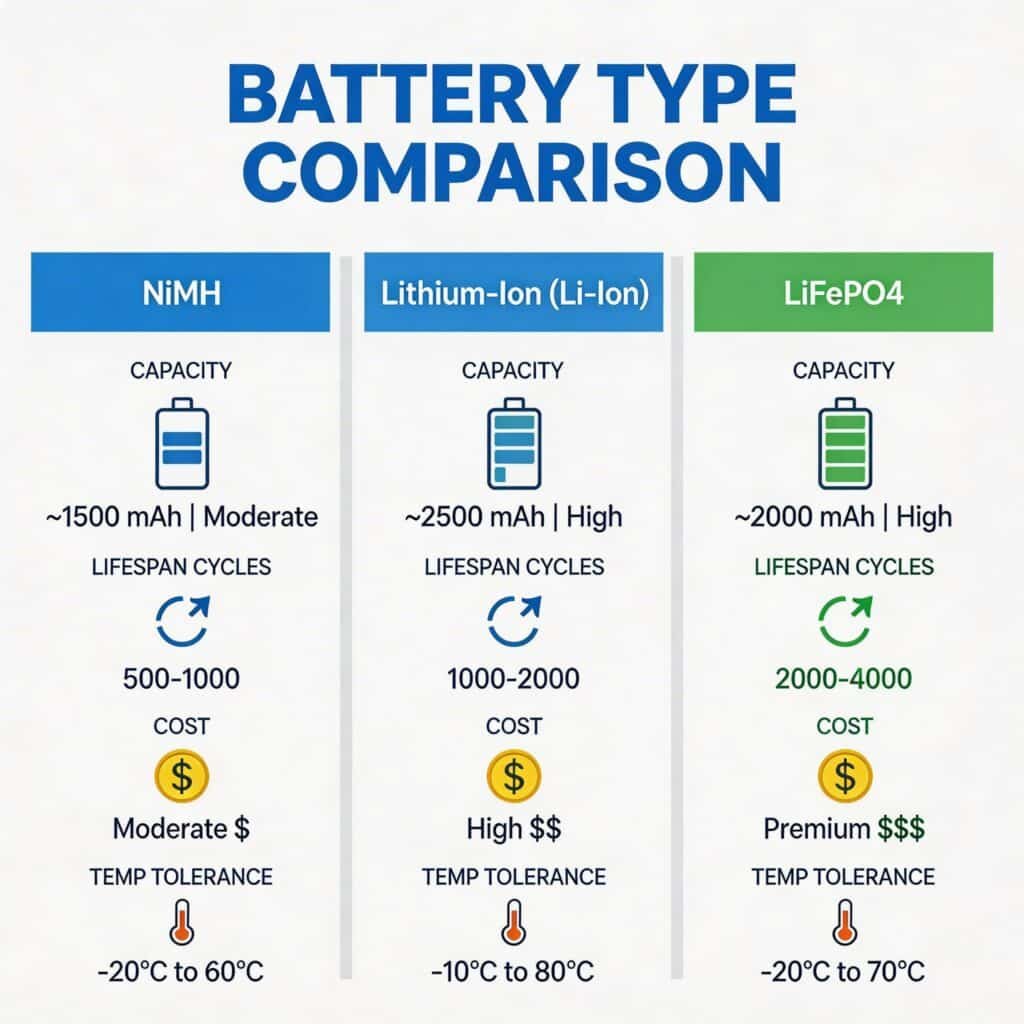
Battery Types Explained: NiMH vs. Lithium-Ion vs. LiFePO4
Not all rechargeable battery path lights are created equal, and the battery chemistry inside determines everything from cold-weather performance to how long your lights shine each night. Here’s my honest breakdown:
NiMH (Nickel-Metal Hydride)
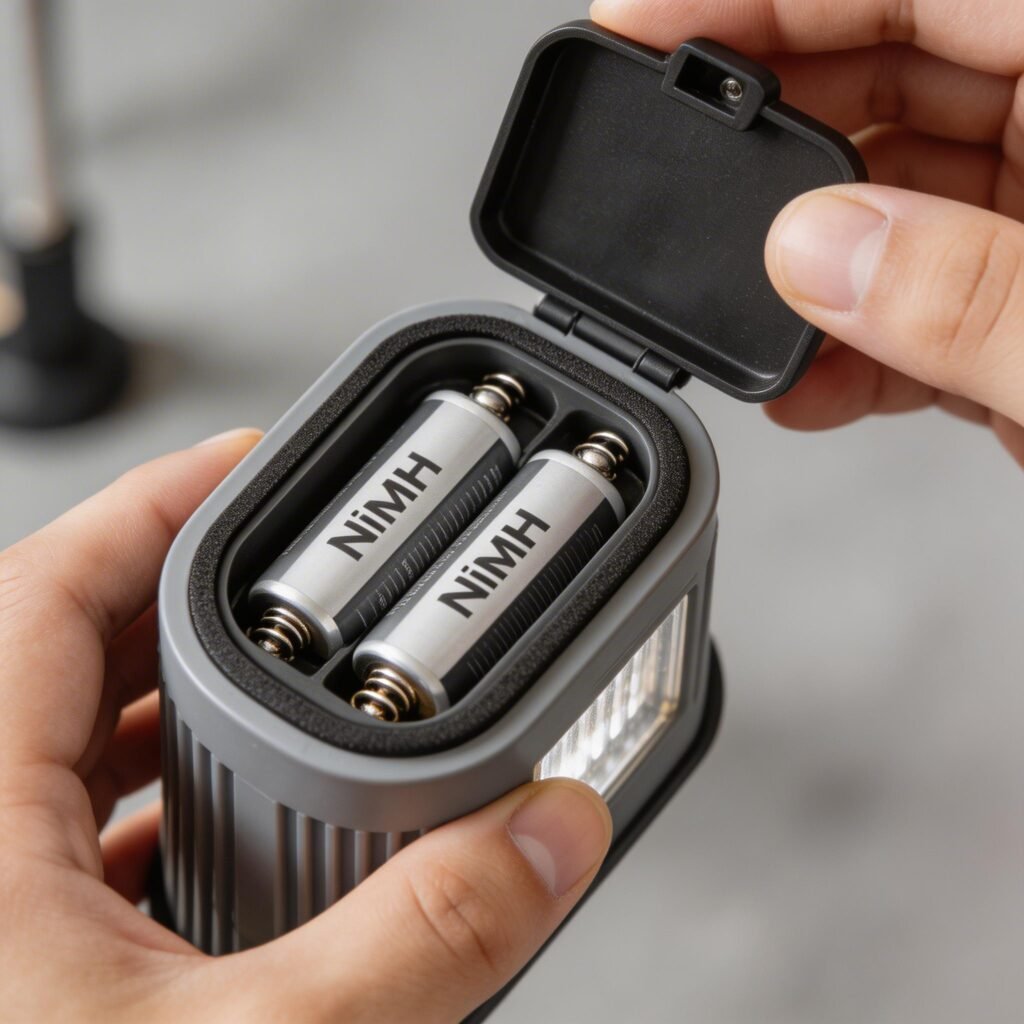
The industry workhorse. Most solar walkway lights use AA or AAA NiMH batteries because they’re cheap, widely available, and reasonably efficient. Standard capacities range from 600mAh to 1200mAh. The downside? They don’t love extreme cold, losing up to 50% capacity when temperatures drop below freezing. The National Renewable Energy Laboratory has documented this performance drop extensively.
Lithium-Ion (Li-ion)
Higher energy density means longer run times in a smaller package. These batteries handle cold better than NiMH and typically last longer before degradation kicks in. The catch? They’re more expensive to replace, and some manufacturers use proprietary sizes that make finding replacements a nightmare. IMO, unless the manufacturer uses standard 14500 or 18650 cells, proceed with caution.
LiFePO4 (Lithium Iron Phosphate)
The premium option you’ll find in higher-end solar landscape lighting. These batteries can handle 2000+ charge cycles, perform well in temperature extremes, and are incredibly stable. The tradeoff is upfront cost—expect to pay 30-50% more for lights using this chemistry.
3 Myths About Solar Light Batteries That Cost You Money
After reviewing hundreds of solar garden lights, I’ve heard every misconception in the book. Let me save you some grief:
Myth #1: “Higher mAh Always Means Brighter, Longer Light”
Nope. Battery capacity only matters if the solar panel can actually charge it fully. A 1200mAh battery paired with a tiny 0.5W panel is like putting a sports car engine in a golf cart—impressive specs, terrible execution. The panel-to-battery ratio matters far more than raw numbers.
Myth #2: “All Rechargeable AA Batteries Work the Same”
This one makes me cringe. Solar lights require low self-discharge NiMH batteries specifically designed for solar applications. Standard rechargeable AAs lose their charge sitting idle, which ruins the whole system. Look for batteries labeled “solar” or “low self-discharge” (LSD). According to EPA guidelines, using the correct battery type also reduces hazardous waste from premature failures.
Myth #3: “Sealed Batteries Mean Better Weatherproofing”
Manufacturers love this excuse. But here’s the reality: a properly designed battery compartment with a rubber gasket seal protects just as well—and lets you actually maintain your investment. I’ve tested lights with accessible batteries through Minnesota winters and Arizona summers. Weatherproofing is about engineering, not restriction.
What to Look For When Shopping
After a decade in this industry, I’ve developed a mental checklist that separates the best solar path lights from expensive paperweights. Here’s what actually matters:
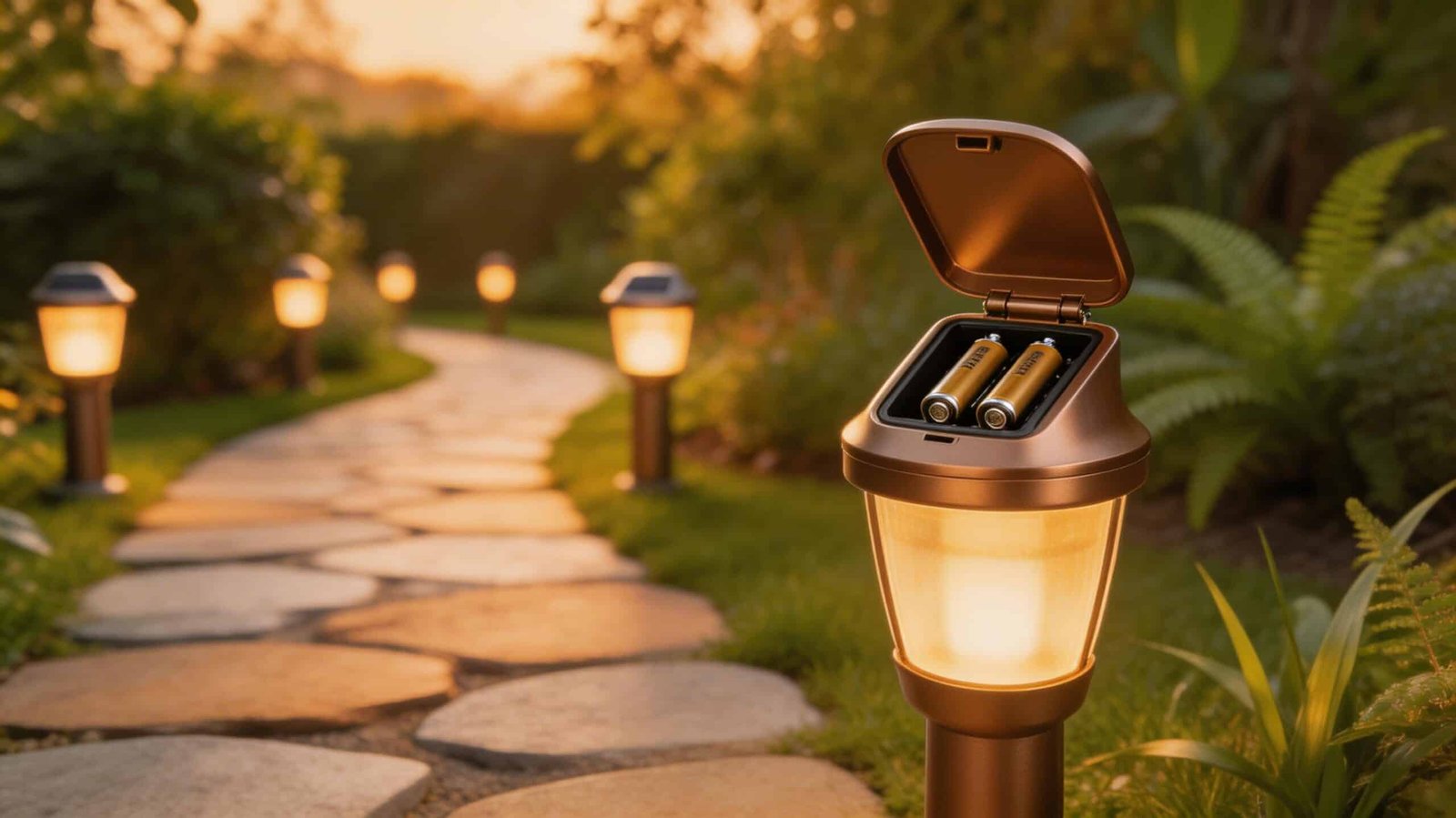
1. Accessible Battery Compartment: Can you open it with one hand? Without tools? Some lights require unscrewing the entire stake or prying open a panel that was clearly never meant to be opened. Hard pass.
2. Standard Battery Sizes: AA and AAA NiMH batteries are available at every hardware store on Earth. Proprietary battery packs? That’s a manufacturer betting you’ll buy a whole new set of lights instead of hunting down replacement parts. The Mancra solar pathway lights I reviewed use standard AAs—exactly how it should be.
3. Adequate Solar Panel Wattage: For rechargeable battery path lights using 600-800mAh batteries, you want at least 0.8W panels. For 1000mAh+ batteries, look for 1.2W or higher. Anything less means your batteries never fully charge, accelerating degradation.
4. Lumens Per Light: For pathway illumination, 10-20 lumens per light works great. More isn’t always better—you want to see where you’re walking, not land aircraft. The Sunvivo solar path lights hit this sweet spot perfectly.
5. Warranty Length: Any manufacturer confident in their product offers at least a 2-year warranty. One year? They’re hedging their bets that the batteries will die right after coverage ends.
My Field-Tested Recommendations
I’ve personally installed and monitored these lights at my own property and test sites. These aren’t armchair reviews—they’re battle-tested picks:
Best Overall: Look for lights combining monocrystalline solar panels (more efficient than polycrystalline), stainless steel construction, and tool-free battery access. The investment pays for itself when you’re swapping $8 worth of batteries instead of buying entirely new fixtures every two years.
Best Budget Option: Plastic housings get a bad reputation, but quality ABS plastic with UV stabilizers holds up surprisingly well. The key is finding budget lights that don’t cheap out on the battery compartment design. A twist-off cap beats a screwed-on panel every time.
Best for Cold Climates: If you’re dealing with serious winters, prioritize Li-ion or LiFePO4 chemistry. Yes, they cost more upfront. No, you won’t be replacing dead lights every spring.
Expert Commentary: This video provides an excellent visual explanation of how solar light batteries charge and discharge—essential knowledge for understanding why battery quality and replaceability matter so much to your lighting investment.
Pro Maintenance Tips for Maximum Lifespan
Even the best replaceable battery solar lights need some TLC. Here’s my maintenance routine that keeps my test lights running strong:
Monthly: Wipe solar panels with a damp cloth. Dust, pollen, and bird droppings can reduce charging efficiency by 30% or more. Takes 30 seconds per light 🙂
Seasonally: Check battery contacts for corrosion. A quick wipe with a pencil eraser restores conductivity if you spot any green or white buildup.
Annually: Test battery performance by timing how long lights stay lit after a full sunny day charge. When that number drops below 4 hours (from an original 8+), it’s replacement time.
When Lights Fail: Before assuming batteries are dead, check if the sensor is working. If your solar path lights sensor isn’t working, the issue might be simpler than you think.
Pro tip: Keep a rotation of spare batteries pre-charged and ready. When you notice dimming, swap in the fresh set immediately—don’t wait until lights completely fail. Fully draining NiMH batteries repeatedly shortens their total lifespan.
Frequently Asked Questions
How often should I replace batteries in solar path lights?
Most rechargeable batteries in solar path lights last 1-2 years before needing replacement. Signs you need new batteries include shorter run times, dimmer light output, and lights that won’t hold a charge even after sunny days. High-quality NiMH batteries might stretch to 3 years with proper care.
What type of batteries do solar path lights use?
Most solar path lights use AA or AAA NiMH (Nickel-Metal Hydride) rechargeable batteries, typically rated between 600mAh and 1200mAh. Some newer models use lithium-ion batteries, which offer longer life but are less commonly replaceable. Always match the voltage (usually 1.2V for NiMH) when replacing.
Can I use regular alkaline batteries in solar lights?
No, you should never use regular alkaline batteries in solar lights. Solar panels continuously charge the batteries during daylight, and alkaline batteries are not designed to be recharged. This can cause leakage, damage to the light, or even fire hazards. Only use rechargeable batteries rated for solar applications.
Why are my solar path lights dim even with new batteries?
Dim lights with new batteries usually indicate dirty solar panels, insufficient sunlight exposure, or a failing LED. Clean the panels with mild soap and water, ensure they receive 6-8 hours of direct sunlight, and check if the light sensor is obstructed. Also verify you installed solar-specific rechargeable batteries—not standard rechargeables from your TV remote.
My Top Recommended Gear
Based on years of testing solar path lights with replaceable batteries, here are the products I personally use and recommend:
- Best Solar Path Lights with Replaceable Batteries: Stainless Steel Solar Path Lights with Replaceable Batteries – Durable construction, tool-free battery access, and reliable performance through all seasons.
- Best Replacement Batteries: Eneloop AA NiMH Rechargeable Batteries – The gold standard for low self-discharge batteries that actually perform in solar applications.
- Best Budget Solar Garden Lights: 8-Pack Solar Garden Pathway Lights – Affordable entry point with accessible battery compartments and decent performance for the price.
When you invest in outdoor solar lighting with replaceable batteries, you’re not just buying lights—you’re buying years of hassle-free illumination. The upfront research pays dividends every time you spend $10 on batteries instead of $100 on entirely new fixtures. That’s the kind of smart homeowner move I can get behind.
Disclaimer: This post contains affiliate links. As an Amazon Associate, I may earn a commission from qualifying purchases at no additional cost to you.