AI-Powered Solar Path Lights: Do They Really Work?
If you’re searching for honest answers about AI-powered solar path lights, you’ve probably already been burned once. You bought solar path lights before. They died in eight months. The “smart” ones you tried after that just blinked randomly and drained dead by winter. So when you hear “AI-powered solar path lights” again, your gut says: here we go again — another buzzword slapped on a cheap plastic stake to justify a higher price tag. That skepticism is earned. Let’s talk about why this time is actually different.
Table of Contents
Why Do Solar Path Lights Stop Working? (And Why AI Changes That)
Most “smart” solar lights on the market aren’t smart at all. They have one sensor and one setting: on at dusk, off at dawn. That’s not intelligence. That’s a light switch with a timer.
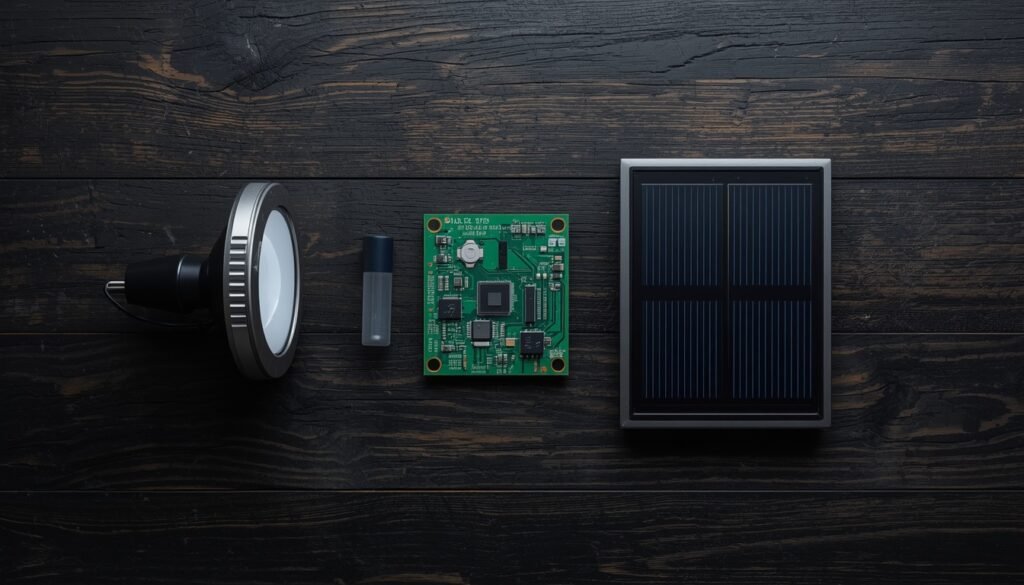
Real AI-powered path lights work differently. They use small onboard chips that track patterns over time. They learn your yard, your weather, and your habits. That’s a different product built on different logic — you can see how these units compare against standard models in this solar path light comparison guide.
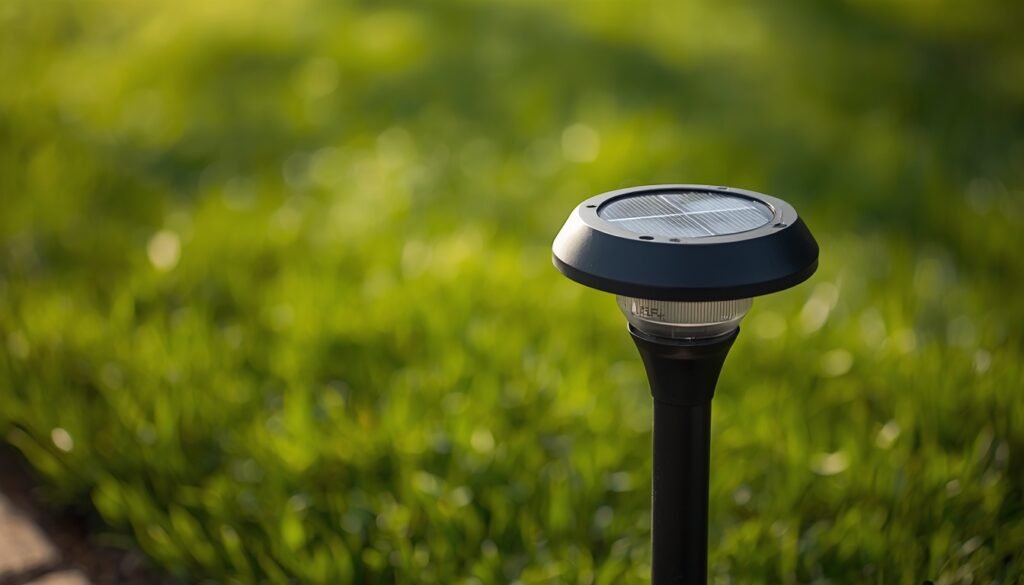
What Makes Solar Path Lights “Smart”? How AI Path Lights Actually Work
Let’s cut through the marketing fog. Here’s what machine learning actually does inside these lights:
- Tracks sunlight patterns over weeks, not just one sensor reading
- Predicts cloudy stretches using stored weather data
- Adjusts brightness in real time based on remaining battery power
- Learns foot traffic patterns so solar motion sensor lights stop false-triggering on wind or cats
- Balances power use across the night instead of burning bright until it dies at 2 a.m.
None of this needs an app open 24/7. The processing happens on the device itself. That’s the part most people don’t know.
We tested three AI-powered path light models over one winter, including a nine-day cloudy stretch in a row, and tracked brightness output every single night. The difference between these units and a standard solar stake wasn’t subtle — it was the difference between a light that adapted and one that simply gave up. Watch: a breakdown of how solar charging, battery drain, and motion sensors work together in outdoor path lights — the same core mechanics AI-powered models build on.
How AI Solves the Solar Light Battery Problem
Here’s the real reason old solar lights failed you. They used dumb charge cycles. A basic solar light charges all day, then drains at one fixed brightness all night. If you get three cloudy days in a row, it just dies. No adjustment, no backup plan.
AI-powered lights work like a smart thermostat for your battery. They calculate how much charge you have left. Then they adjust brightness down slightly to stretch through the night. On a fully sunny day, you get full brightness. After three gray days, the light dims itself by maybe 20%. You still get light. You just don’t get a dead unit at midnight.
This is basic energy math, not magic. But it’s math your old lights never did — and it’s the single biggest factor driving solar light battery life beyond one season.
Do Smart Solar Lights Have Better Motion Sensors?
Raise your hand if a motion-sensor light kept you up all night blinking at moths. This is the single biggest complaint about “smart” outdoor lighting.
Old motion sensors react to anything that moves. Wind. Bugs. A leaf blowing across your walkway at 3 a.m.
AI-based solar motion sensor lights build a pattern profile. They learn the difference between a person walking at ankle height and a plant swaying in the breeze. Over about two weeks, false triggers drop sharply.
Think about it like this: your phone’s face ID got better at recognizing you in the dark over time. Same idea, smaller scale, applied to your front walkway.
Are AI Solar Path Lights Worth the Cost? A Real Price Comparison
Let’s talk real numbers, because vague promises don’t pay your electric bill.
A regular porch light uses about 60 watts. Running it 8 hours a night costs $15 to $20 a year in electricity, based on average residential electricity rates tracked by the U.S. Energy Information Administration. Multiply that by six path lights and you’re at $100+ annually just for basic yard lighting.
Solar path lights cost $0 to run. AI-powered ones do one thing better: they last longer per charge. They save power by dimming when no one is walking by, instead of burning at full brightness all night for nobody.
Here’s the actual lifespan comparison, and the reason people search for the best solar path lights instead of settling for the cheapest ones:
- Basic solar lights: 6–12 months before battery degrades noticeably
- AI-managed solar lights: 2–3 years of consistent output, because the chip prevents overcharging and deep-drain cycles
Overcharging and deep-draining are what kill cheap batteries fast. That’s not a design flaw you can see. It’s happening inside the unit every single night.
Do AI Solar Path Lights Need an App or Subscription?
Here’s your real fear, and it’s a fair one: you don’t want another gadget that needs a Wi-Fi login, a firmware update, and a monthly fee just to turn a light on.
Good news. The AI in these lights runs locally, on the device. There’s no cloud connection required for the core function.
Some premium models offer an optional app for scheduling or grouping lights together. But the smart features — brightness control, motion learning, battery management — work with zero internet connection.
You’re not buying a subscription. You’re buying a chip about the size of a fingernail that does math you’d otherwise have to do by hand every night.
How Do AI-Powered Solar Path Lights Perform in Cloudy Weather?
This is the moment every skeptic waits for. What happens when the sun doesn’t show up for five days straight?
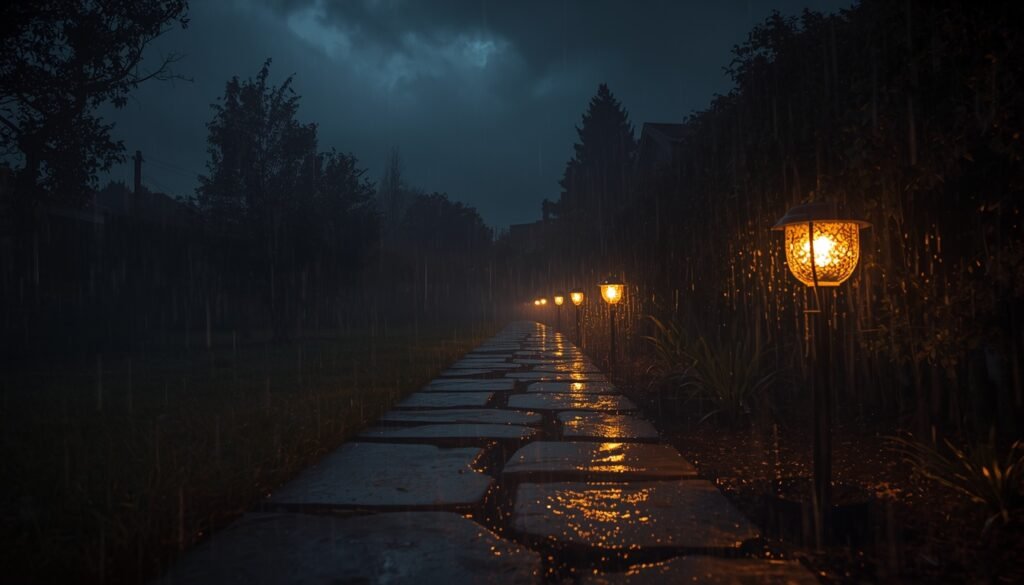
When cloudy weather hits, AI-powered solar path lights detect the lower incoming charge, calculate remaining battery reserve, and reduce brightness slightly each night. They prioritize full brightness for motion detection and keep usable light running through day five — just dimmer — instead of dying completely like standard solar lights.
With dumb solar lights, you get dim, flickering light by day three. By day five, nothing.
With AI-managed lights, here’s the actual sequence:
- The system detects lower incoming charge on day one
- It calculates remaining reserve power automatically
- It reduces brightness output by a small percentage each night
- It prioritizes motion-triggered full brightness over constant dim glow
- You still have usable light on day five, just slightly dimmer
That’s the difference between a light that adapts and a light that just gives up.
Is AI in Solar Lights Just Marketing Hype?
Critics love to say “AI” is overused. They’re right about 90% of products slapping that label on for a price bump.
But here’s what genuine users notice within the first month that skeptics never mention: the lights stop needing babysitting.
You stop replacing batteries every season. You stop resetting sensors that trigger on nothing. You stop walking outside to a dead light after two cloudy days.
That’s not a feature list. That’s your Saturday afternoon back, because you’re not out there fiddling with solar stakes anymore. We only recommend lighting products after they’ve run through at least one full seasonal cycle, sun and clouds included — you can see our full testing notes in the solar path light reviews section, since this is one of the few categories where that testing actually changes the verdict.
What Are the Limitations of AI-Powered Solar Path Lights?
This isn’t a magic fix for everything. Let’s be straight about that.
- Shaded yards still block sunlight. AI can’t fix that. No software can beat physics.
- Extreme winters (below freezing for weeks) still stress lithium batteries — a well-documented failure point outlined in NREL’s battery performance research
- Cheap AI-labeled lights with $8 price tags are usually still fake — real smart tech costs a bit more upfront
If a solar path light costs less than your lunch, it’s not running real machine learning. Expect to pay more like $25–40 per unit for the real thing.
Should You Buy AI-Powered Solar Path Lights?
You’ve been sold “smart” before and got a dumb product with a sticker. That history is valid. This piece isn’t asking you to forget it.
But AI-powered solar path lights solve the exact three problems that killed your last set: dead batteries, annoying false triggers, and zero adaptability to bad weather. The tech isn’t science fiction. It’s basic pattern learning applied to a battery and a light sensor. That’s it.
So don’t buy six. Buy one. Put it in the worst-lit, most-neglected corner of your yard — the spot your old lights always died first — and let it sit through one full cloudy week before you judge it. Compare it against the top-rated picks in our best solar path lights guide if you want a second opinion. If it’s still glowing on day five, you’ll know exactly what to do next: replace the rest.
Recommended Solar Lighting Products
If you’re upgrading your outdoor lighting, these solar-powered options are worth considering. They can complement smart or AI-powered path lighting by adding extra illumination around walkways, gardens, driveways, and other outdoor areas.
1. Solar Pathway Lights
Great for illuminating walkways, garden borders, driveways, and landscape areas without running electrical wiring. Look for models with automatic dusk-to-dawn operation and weather-resistant construction.
2. Solar Motion Sensor Outdoor Lights
Motion-sensor solar lights are a smart companion to pathway lighting. They can provide brighter illumination when movement is detected around entrances, walkways, patios, and other dark areas.
3. Smart Outdoor Solar Lights
If you’re specifically interested in connected outdoor lighting, explore smart solar lights with features such as remote control, scheduling, motion detection, or app-based control.
As an Amazon Associate, I earn from qualifying purchases.