Solar vs. Plug-In Pathway Lights in 2026: Why Solar Wins
If you’re weighing solar vs. plug-in pathway lights in 2026, start here. You bought solar path lights once. Maybe twice. By the next spring, half of them were dead sticks in your flower bed. The panels went cloudy. The stakes snapped. The “warm glow” looked more like a dying firefly. So now you think solar is a scam, and only wired lights are worth the money. I get it. For years, you were right. But 2026 solar isn’t the junk you remember. And the plug-in path you’re defending costs way more than you think. Let me show you the numbers.
Table of Contents
Prefer to watch first? Here’s a quick side-by-side of solar versus wired path lighting before you read on:
Why Cheap Solar Pathway Lights Used to Fail
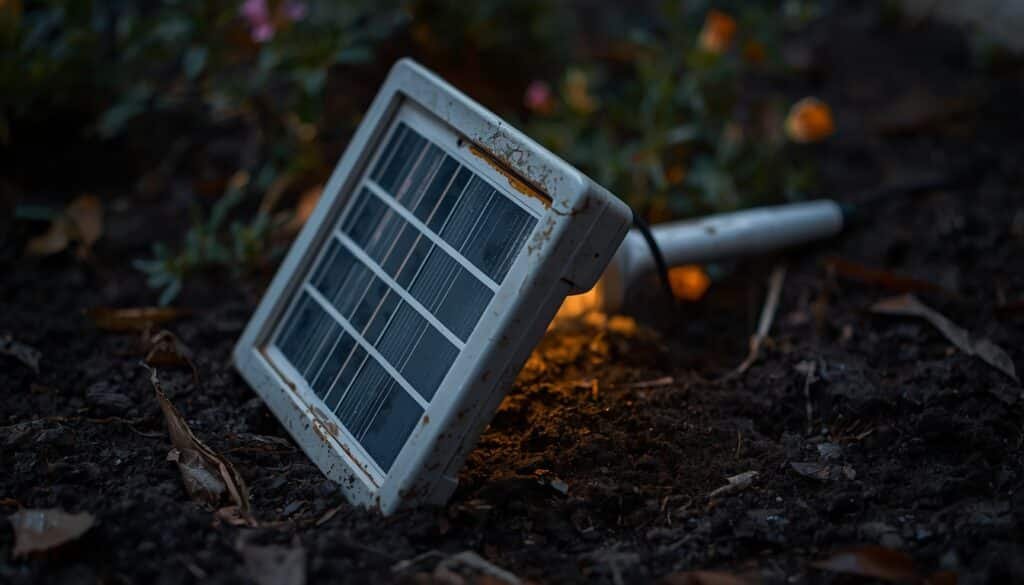
Let’s start by agreeing on something. The cheap solar lights of the past deserved every bad review. One tester installed a set at a rental house. Within eight months, half were dead. The batteries corroded and the panels clouded over. That’s not a fluke. Reddit owners report that only 50 to 60 percent of cheap plastic solar lights survive their first year.
I’ve pulled enough dead plastic lights out of flower beds to know the pattern by heart—corroded battery, cloudy panel, snapped stake. So if you’re skeptical, good. You learned the right lesson from the wrong products. But you learned it in 2018. The tech moved on. You didn’t.
LiFePO4 vs. Ni-MH: The Battery That Changed Solar Path Lights
Here’s the single biggest shift. It’s not the panel. It’s the battery inside.
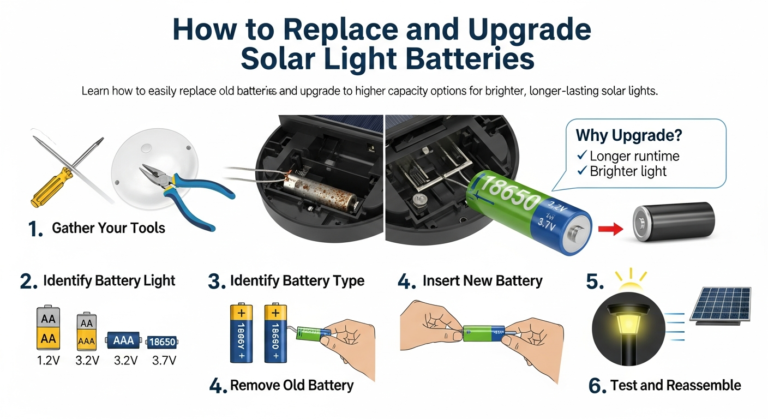
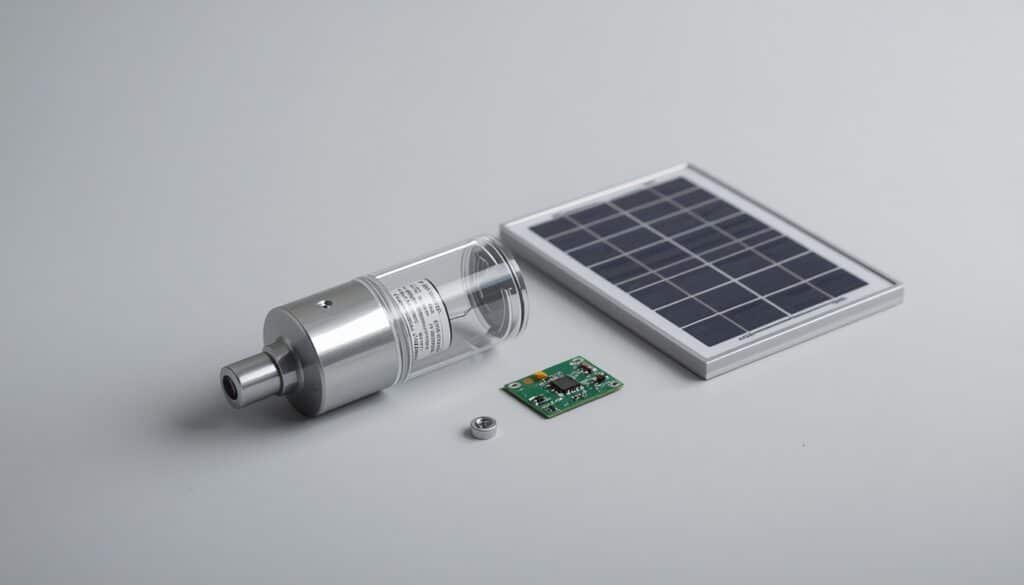
Old solar lights used Ni-MH cells. These are the same batteries that die young, hate the cold, and fade fast. Premium 2026 lights use LiFePO4 batteries instead. That’s lithium iron phosphate—the same chemistry in home power walls and electric cars.
Why does this matter to you?
- LiFePO4 lights outlast old Ni-MH lights by 3 to 4 years.
- They handle cold far better, so winter doesn’t kill them.
- A built-in chip protects the battery and helps it last longer.
LiFePO4 cells typically handle 2,000-plus charge cycles—many times more than the Ni-MH cells in old solar lights. This is the fix for your exact complaint. Your lights died because the batteries were cheap. That problem got solved.
How Bright Are Solar Pathway Lights in 2026?
I know the other knock. “Solar lights are dim. They’re decoration, not real lighting.” That used to be true. It isn’t anymore.
Functional pathway lighting—the kind that keeps you from tripping in the dark—needs 50 to 300 lumens. Ambiance lighting needs even less, around 5 to 10 lumens. Modern solar spotlights now hit 650 lumens on a single charge. That’s not a glow. That’s real, useful light.
The panels got smarter too. The best models use monocrystalline panels, which turn about 45 percent of sunlight into power. One premium light runs 10-plus hours after a sunny day. It still gives 6 hours after a cloudy winter day. So the “dim solar” argument is dead. You just have to stop buying the $3 plastic ones.
Plug-In Pathway Lights Cost More Than You Think
Now let’s talk money. This is where plug-in lights fall apart.
On paper, a wired light looks reasonable. But “installed” is the word that hides the pain. Here’s what a real plug-in install costs in 2026:
- Low-voltage landscape lighting fixtures: $100 to $150 per light, installed.
- Hardwired fixtures: $100 to $200 per light.
- Trenching to bury the wire: $5 to $13 per linear foot.
- A transformer: $200 to $500 installed.
- A new outdoor GFCI outlet: $250 to $400.
Add it up. A full professional job averages $3,500. Most people pay $2,000 to $6,000. You’re not just buying lights. You’re paying an electrician, renting a trencher, and repairing your torn-up lawn afterward.
Solar Path Lights Install With No Trenching or Wiring
Now compare that to solar. You buy the light for $10 to $150. You push it into the ground. Done. No electrician. No permit. No trench. (Want it right the first time? Here’s how to install solar path lights without the rookie mistakes.)
Most codes say the wire has to sit about 6 inches underground. So with plug-in, you dig across your whole yard. Solar means angling a panel toward the sky.
And it doesn’t stop at install day. Wired lights add to your power bill every single night. Solar runs on free sunlight, forever. Over ten years, that gap isn’t small. It’s the difference between a few hundred dollars and a few thousand.
Solar Pathway Lights You Can Move Anytime
Money aside, there’s something wired lights physically cannot do. They can’t move. Once that cable is in the ground, your design is locked. Want to shift a light three feet to hit a new rose bush? That means re-trenching. With solar, you pull the stake and re-stick it. It takes seconds—which makes it easy to dial in even spacing along the whole path as you go.
This matters more than people admit:
- Renters can install solar without touching the property or asking a landlord.
- New gardeners can experiment before committing.
- Anyone mid-project can adjust as the yard grows and changes.
Wired lighting demands you know your final layout on day one. Real yards don’t work like that. Real yards change.
Do Solar Pathway Lights Work in Winter?
Yes, modern solar pathway lights work in winter, but with less runtime. Shorter days mean less charging, and cold cuts battery capacity by 20 to 40 percent. A light that runs 8 to 12 hours in summer may run 4 to 6 hours in deep winter. LiFePO4 batteries and USB-C backup ports close most of that gap.
Here’s the objection you’re loading up right now. Winter. Cloudy weeks. Short days. I’m not going to dodge it, because that’s a fair point.
But two things fix this. First, LiFePO4 batteries handle cold far better than the old Ni-MH cells. The winter drop is smaller than it used to be. Second, the newest hybrid lights include a USB-C backup port. On a dark, cloudy stretch, you top them up like a phone. You get solar freedom with a wired-style safety net. So the winter gap that killed your faith? Engineers already closed most of it.
How to Buy Solar Pathway Lights That Last
One more thing, because I don’t want you burned again. The trick isn’t just “buy solar.” It’s buy the right solar. The cheap stuff still fails. Here’s how to find the best solar pathway lights in 2026 and skip the junk:
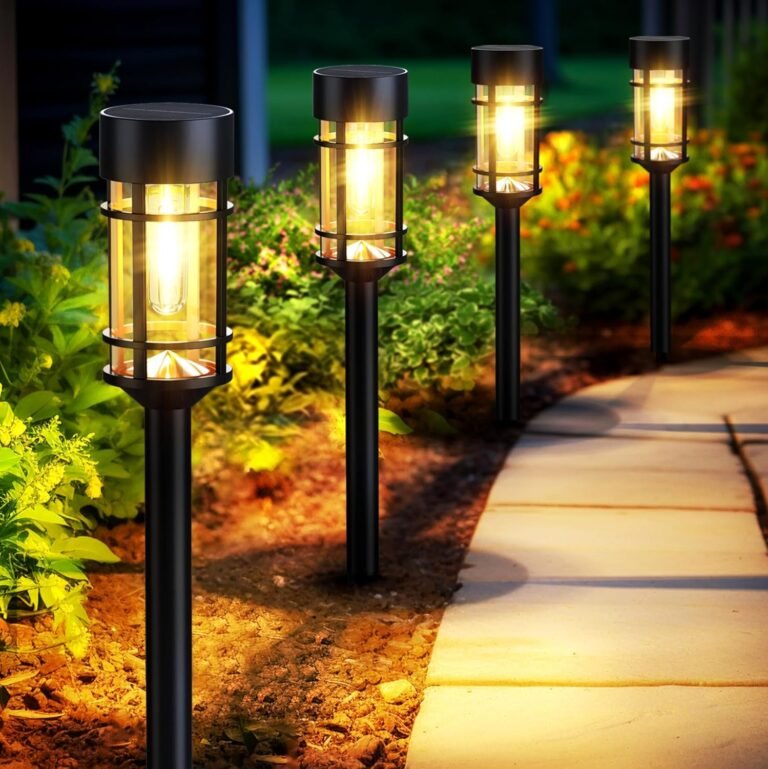
- Housing: Choose metal and glass, not plastic. Plastic cracks and yellows in 1 to 3 years. Metal and glass last 3 to 5 years or more.
- Battery: Insist on LiFePO4. This is the whole ballgame.
- Waterproofing: Look for IP65 or higher (the IP scale is the international IEC standard for dust and water resistance). IP67 survives being briefly underwater.
- LEDs: The bulbs themselves last 50,000-plus hours. They’ll outlive the battery.
Spend a little more on build quality. You’ll pay once instead of every spring.
What Solar Pathway Lights Feel Like to Own
Here’s what the spec sheets don’t capture. The best part of solar isn’t the savings. It’s the feeling.
You walk out on a summer evening. The path is glowing. And you did that yourself, in an afternoon, with your own two hands. No contractor scheduled three weeks out. No $3,500 invoice. No wires under your grass you’ll worry about hitting with a shovel.
That’s the quiet pride wired lights can’t sell you. Ownership. Simplicity. The freedom to change your mind tomorrow—and to borrow design ideas the pros actually use. Plug-in lighting makes your yard a permanent electrical project. Solar makes it a garden you can play with.
Solar vs. Plug-In Pathway Lights: The Verdict
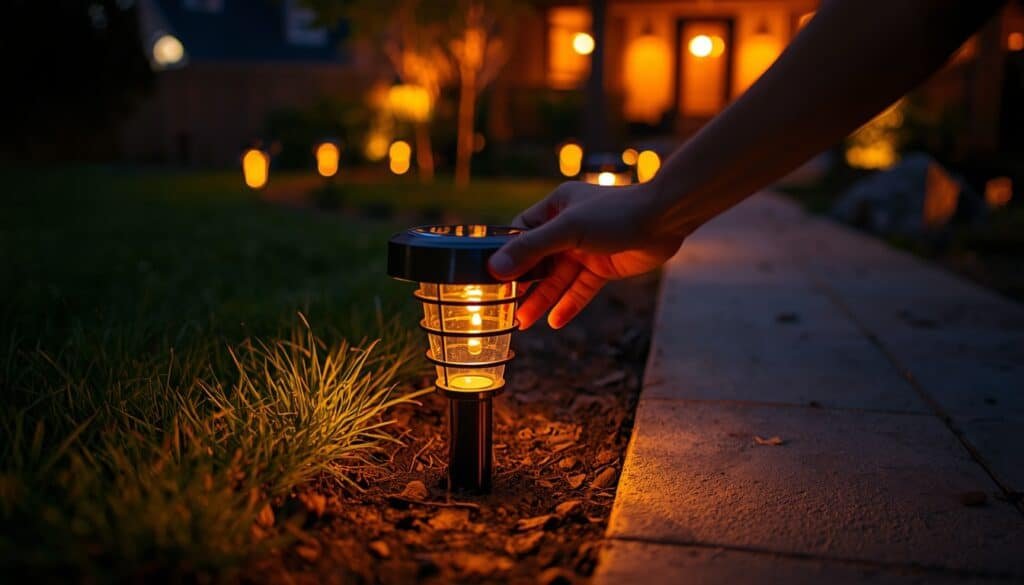
So stop defending a trench you don’t need. The case against solar pathway lights was built on 2018 junk, and that junk is gone. Here’s your move: buy one good LiFePO4 solar pathway light with a metal-and-glass body, push it into the ground tonight, and give it a week—cloudy days and all. Let the light change your mind, not me.
Recommended Gear
These links go to Amazon. As an Amazon Associate, this site earns from qualifying purchases at no extra cost to you.