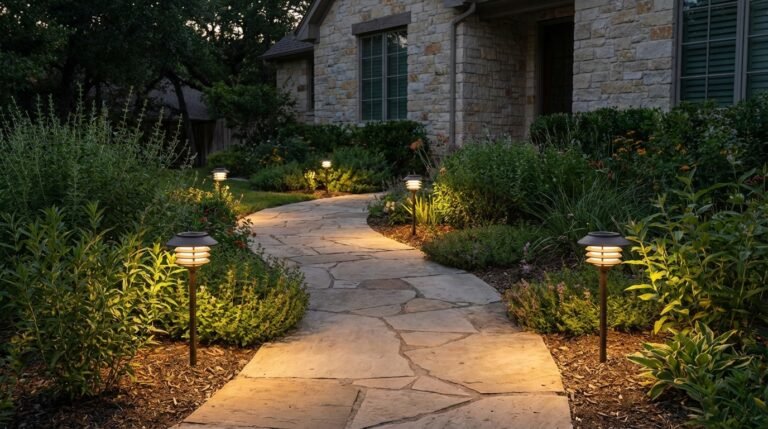
7 Reasons a Matte Black Pathway Beats Gray Concrete
The matte black pathway is the front-yard upgrade quietly taking over in 2026 — and once you see why it works, plain gray concrete starts to look tired. Your front path is the first thing a guest sees. It’s also the thing you stopped noticing years ago. Most walkways are an afterthought: gray concrete, faded pavers, a strip of dirt where the grass gave up. They do their job and nothing more. But this minimalist matte black look changes how a whole home feels. Let me make the full case — even if you think you’ve heard every design fad before.
Table of Contents
Why are matte black pathways trending in 2026? Because they use timeless contrast to make greenery and lighting stand out, while the matte finish keeps the look warm instead of harsh. Dark surfaces also hide dirt and age slowly, and the look scales from a cheap edging upgrade to a full path.
Is a Matte Black Pathway Just Another Trend?
Let’s meet the skeptic head-on. You’ve been burned before. You painted an accent wall teal in 2015. You installed the barn door. You know how this goes: a look feels fresh, then dates hard, then costs money to undo.
Here’s the honest truth. Matte black on pathways is not a color-of-the-year gimmick. It’s a return to contrast — one of the oldest rules in design. Dark ground next to green plants and pale walls has looked good for centuries. Japanese builders were charring cedar black — a centuries-old technique called shou sugi ban — long before Instagram existed. Dark tones make greenery and landscaping pop. They read as bold and timeless at once. That’s not a fad talking. That’s a principle.
How a Matte Black Pathway Makes Your Plants Pop
Here’s the part most people miss. A matte black path doesn’t draw attention to itself. It draws attention to everything around it.
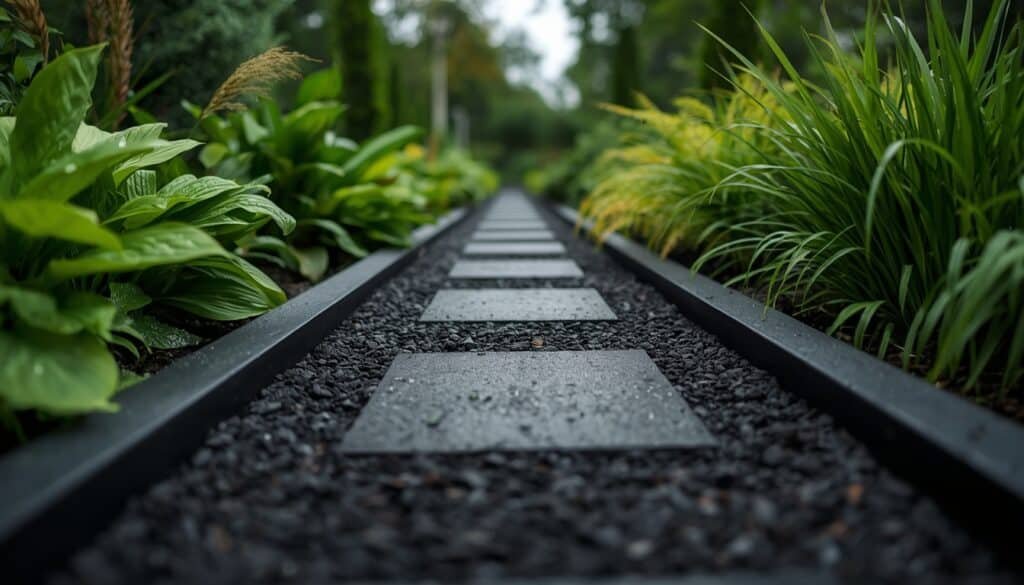
Think of it like a picture frame. A good frame is dark and simple. It makes the art inside look richer. Your plants are the art. The path is the frame. Put a bright green fern next to gray concrete and it looks fine. Put it next to matte black and it looks lush. The color practically glows.
This is why 2026 fence trends went the same way — charcoal, matte black, deep espresso. Not because black is trendy, but because it makes plants stand out. It’s one of the simplest design tricks the pros actually use, and your garden gets an upgrade without a single new plant.
Matte vs. Glossy: Why the Finish Matters
Now here’s where people get it wrong. They hear “black” and picture something harsh. Glossy black is harsh. It shines, it glares, it shows every water spot. It feels like a sports car parked on your lawn.
Matte is the opposite. It soaks up light instead of bouncing it back. It feels soft, calm, and grounded. Designers call this year’s look “warm minimalism” — clean lines that never feel cold. The matte finish is what keeps a dark path from feeling like a hospital hallway. That one word — matte — is the line between “sophisticated” and “trying too hard.”
Practical Benefits of a Matte Black Walkway
Say you don’t care about design theory. Fair enough. You care about whether it’s a hassle. Good news — this is where matte black quietly beats every lighter option.
Here’s what dark surfaces do that pale ones can’t:
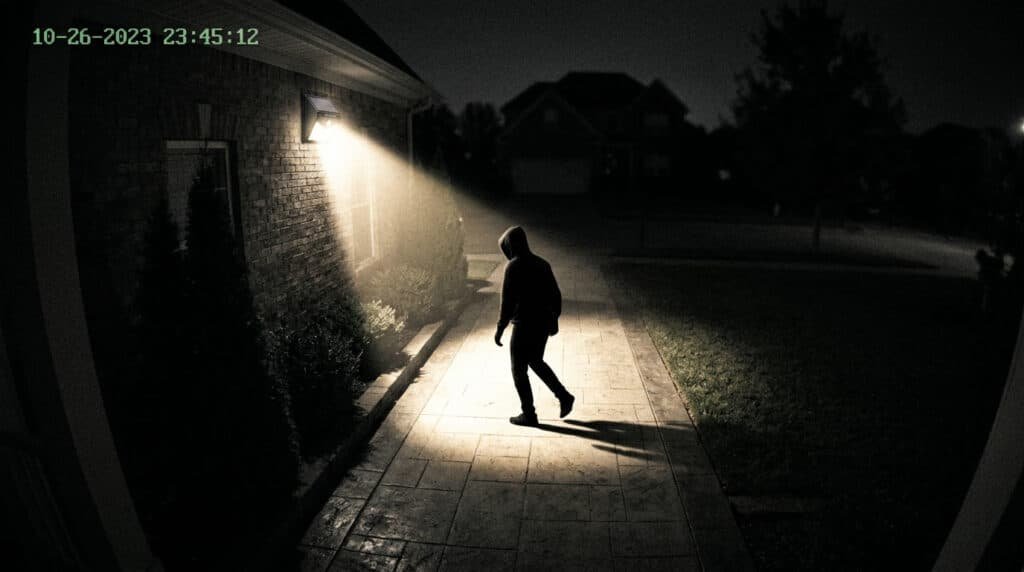
- Hide dirt and wear. Light concrete shows every stain, tire mark, and coffee spill. Dark surfaces shrug them off. Fence pros name this as a top reason people go dark.
- Age slower. Gray pavers fade and yellow after years of sun. Dark tones don’t advertise their age the same way.
- Match anything. Modern house? Works. Traditional brick? Works. Black is a neutral. It plays nice with every style.
- Read as expensive. Matte black hardware and edging signal “high-end” instantly, even on a modest budget.
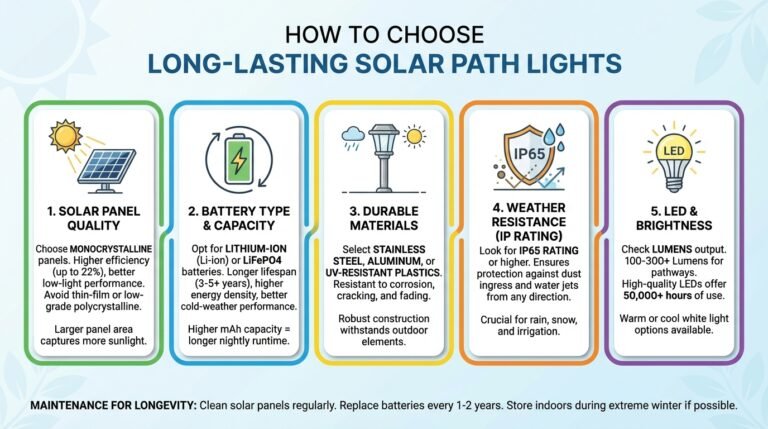
You’re not just buying a look. You’re buying less cleaning and slower aging. If you’re weighing fixtures to match, our solar path light buyer’s guide breaks down which finishes actually read as premium outdoors.
How Much Does a Matte Black Pathway Cost?
Here’s the next wall the skeptic hits: “Sounds expensive.” It doesn’t have to be. And this is the sneaky-smart part — you don’t need to rip out your whole path.
Some of the strongest versions of this look start small. Take your existing gravel path. Add matte black powder-coated steel edging strips along the sides. Suddenly the ragged edges turn into razor-sharp lines. In modern walkway design, metal edging is close to non-negotiable for a clean look. That’s a weekend project, not a renovation.
Watch — edging a garden path with steel, start to finish:
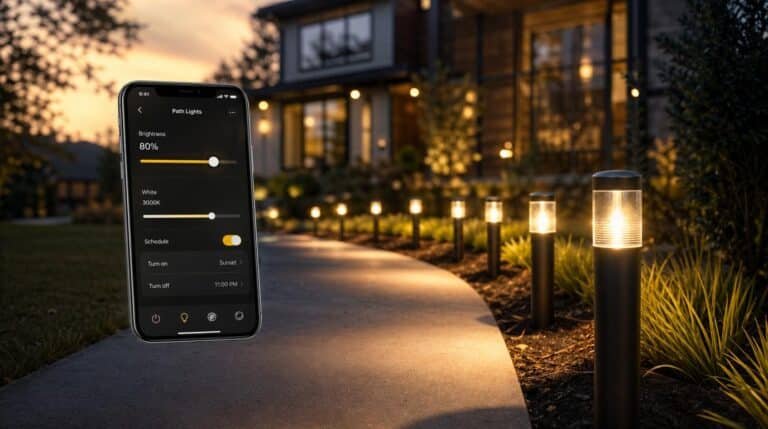
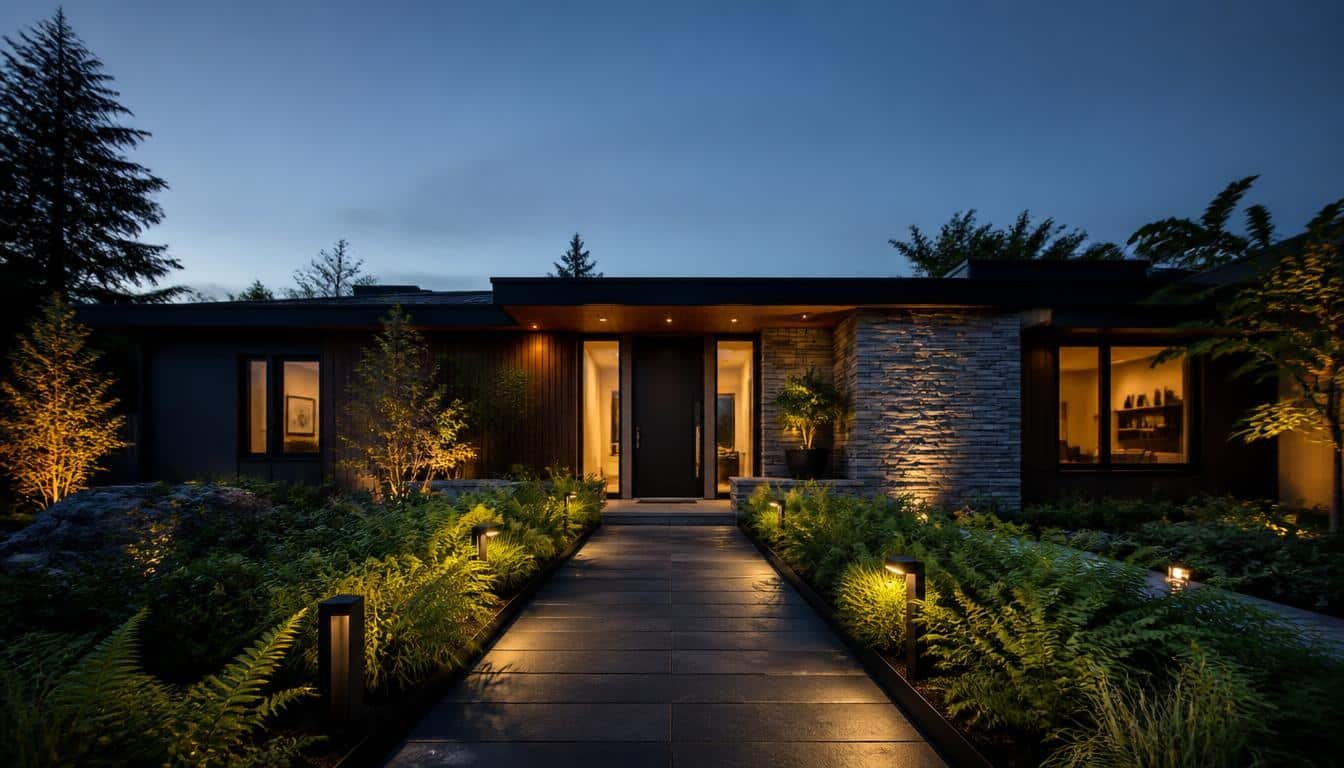
Want to go further? Add slim matte black bollard lights down one side. They give structure by day and light your steps at night. Small change, big shift. The look scales to your wallet — rare for a design trend.
Matte Black Pathway Lighting Ideas for Night
Most walkway advice ignores half the day. The path exists at night too, and this is where matte black does something clever.
A dark path makes warm light look better. A soft pool of light lands on black ground and looks planned — almost like a movie shot. The same light on pale concrete just looks like a porch bulb left on.
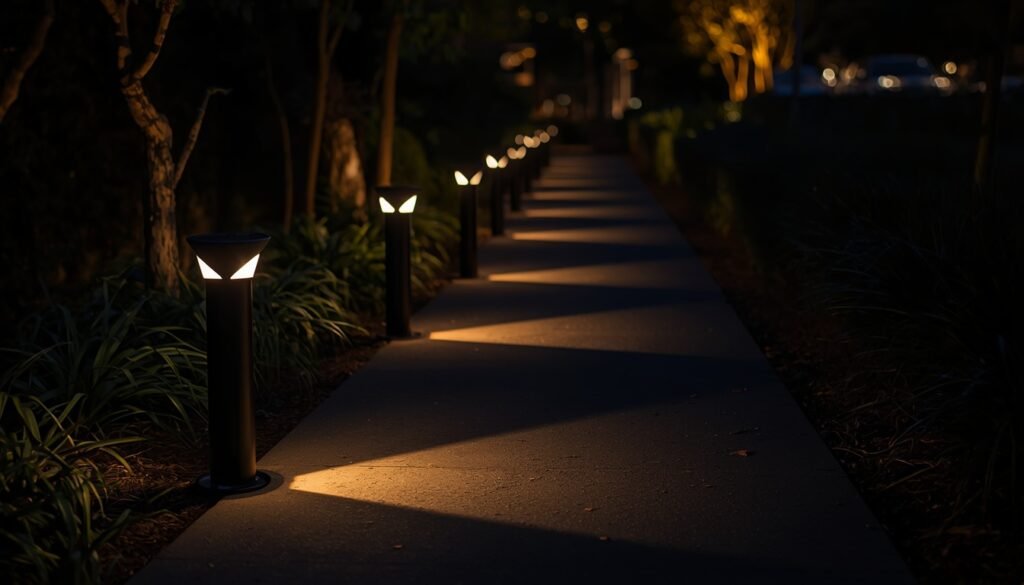
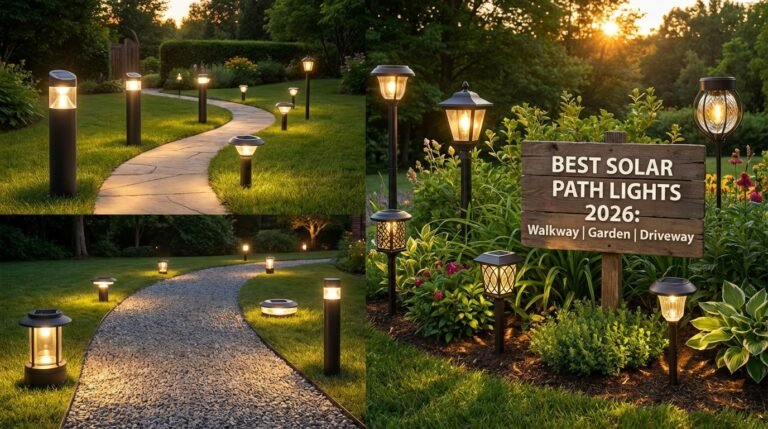
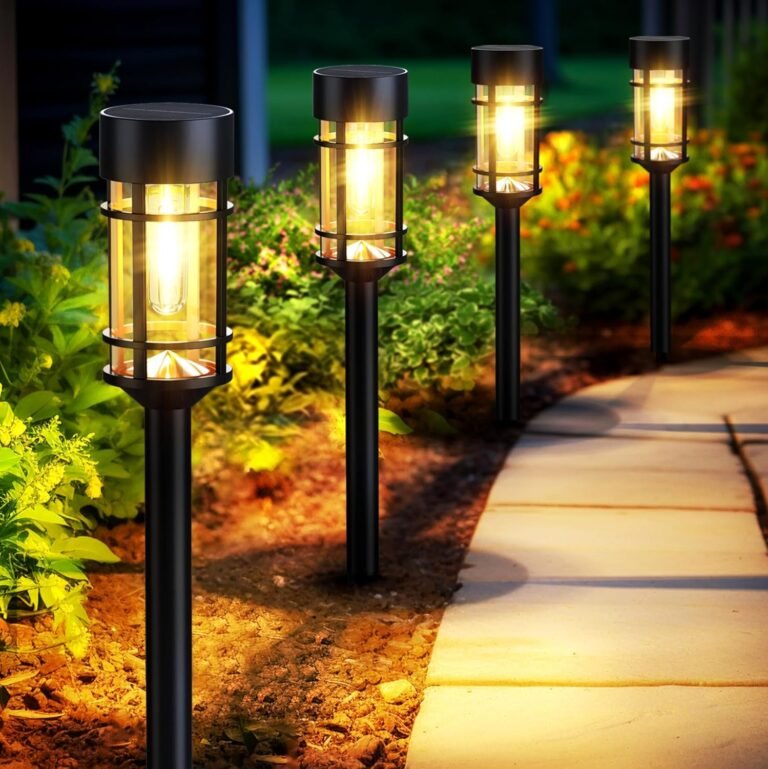
Picture bollard lights spaced evenly down the path. Each one throws a small triangle of glow. Light, shadow, light, shadow — a rhythm as you walk. That’s not luck. That’s the dark ground doing the work. Your home stops looking “lit” and starts looking “designed.” The effect leans on the fixtures, so it’s worth choosing from the top-rated solar path lights rather than the cheapest bin at the hardware store.
Watch — solar pathway lights going in along a front walkway:
Won’t a Black Pathway Feel Cold and Industrial?
This is the smartest objection, so it gets a real answer. Yes — done badly, matte black can feel severe. All-black, hard edges, zero warmth. Like a parking garage.
But nobody serious is telling you to do that. The 2026 version is built on balance. You pair the black with natural materials: warm wood, real stone, soft plants that spill over the edges. That’s the whole point of warm minimalism — high contrast that still feels inviting, not clinical. Bronze accents, textured wood, and layered lighting soften the hard lines. Black is the anchor, not the whole ship. Around it, everything feels warmer by comparison.
How a Matte Black Pathway Changes How Your Home Feels
Here’s the thing spec sheets miss. A clean matte black path changes how it feels to come home. There’s a small pause of pride when your entry looks intentional — when the lines are sharp, when a guest slows down and says, “wait, this looks great.”
A cluttered, faded path wears on you a little every time you see it. You may never name it, but you feel it. A sharp, simple one does the opposite. It reads as calm. As handled. As yours.
I ran matte black edging along my own gravel path last spring, and the strange part was how fast I stopped seeing the path and started seeing the plants. That’s the trick working. Minimalism isn’t about having less. It’s about noticing what’s actually there.
Why Matte Black Pathways Are Trending in 2026
Trends spread for shallow reasons. This one spreads for deep ones:
- Contrast is a timeless principle, not a passing color.
- The matte finish keeps it warm instead of harsh.
- Dark surfaces hide wear and age slowly.
- The look scales from cheap edging to a full path.
- It turns your plants and your lighting into the stars.
Beautiful, practical, affordable, and forgiving. Most trends give you one of those. The matte black pathway gives you all of them. The skeptic came in looking for the catch. The catch is that there mostly isn’t one — as long as you keep it warm and keep it simple. And because you can start with a single strip of edging, there’s almost no risk in trying it.
How to Start Your Matte Black Pathway Today
Look at your front path right now. Really look at it. If it’s just gray and just there, a matte black pathway is the cheapest upgrade that will change how the whole place reads. So don’t gut the yard. Buy one length of matte black steel edging this weekend, run it along the path you already have, and watch your plants suddenly look expensive. Add a single bollard light if you’re feeling it — just install it right the first time so it lasts. That’s the whole move — and once you see the line go sharp, you won’t want to go back.
Get the Look: Matte Black Pathway Gear
Affiliate disclosure: The links below are Amazon affiliate links. As an Amazon Associate, we earn from qualifying purchases — at no extra cost to you.
- Matte black solar bollard lights — warm-white, dusk-to-dawn fixtures that give the path structure by day and that pooled glow at night. Shop matte black solar bollard lights →
- Black steel landscape edging — powder-coated strips that turn ragged gravel edges into the razor-sharp lines that make this look work. Shop black steel landscape edging →
- Warm-white solar path lights — the ~2700K color temperature that keeps the finish “warm minimalism,” not floodlit. Shop warm-white solar path lights →
- Matte black landscape spotlights — low-voltage uplights to graze a fern or shrub so your plants read as the art against the dark path. Shop matte black landscape spotlights →
Frequently Asked Questions
Is a matte black pathway just a passing trend? No. The look is built on contrast — one of the oldest principles in design, where dark ground makes greenery and lighting stand out. Charred-wood traditions like shou sugi ban have used the same logic for centuries. Kept warm and simple, a matte black pathway reads as timeless, not trendy.
Does a matte black pathway get too hot in summer? Dark surfaces do absorb more heat, so a solid black slab can warm up in direct sun. Most people sidestep this by using matte black edging and lights around a gravel, stone, or planted path — not a full black surface. You get the contrast without a hot walkway.
How much does the matte black pathway look cost? You don’t have to replace the path. The cheapest version starts with matte black steel edging along your existing gravel or paver walkway — usually a weekend and a modest budget. A few solar bollard lights build it out from there. The look scales from a small upgrade to a full install.
Should a black pathway be matte or glossy? Matte, almost always. Glossy black glares, shows water spots, and feels harsh outdoors. Matte absorbs light, so it looks soft, calm, and grounded — the “warm minimalism” finish designers favor in 2026. That matte texture is what separates a sophisticated path from one that tries too hard.
What lights look best with a matte black pathway? Warm-white solar bollard lights (around 2700K) are the sweet spot. Against dark ground, their soft glow pools dramatically and looks intentional. Space them evenly down one side for a light-and-shadow rhythm as you walk. Skip cool, bright-white bulbs — they undercut the warm, designed feel.